Easy Crock Pot Beef Stew Recipes Slow Cooker Guide
Crock pot beef stew recipes slow cooker: what if you could enjoy a deeply satisfying, home-cooked meal without spending hours in the kitchen? This method brings together simple, wholesome ingredients to create rich, comforting flavors with minimal effort.
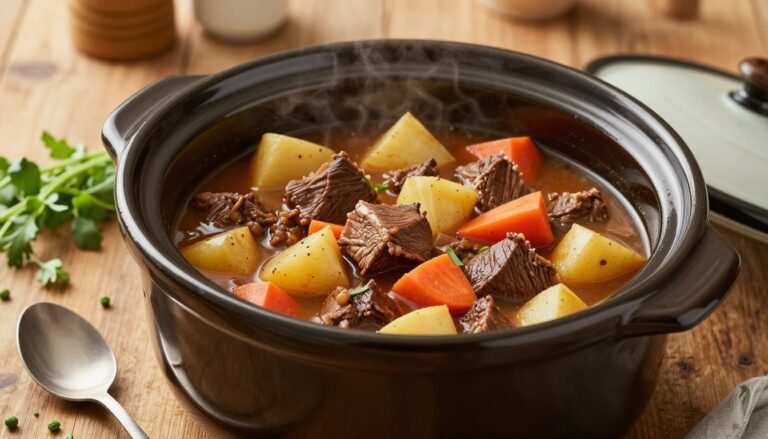
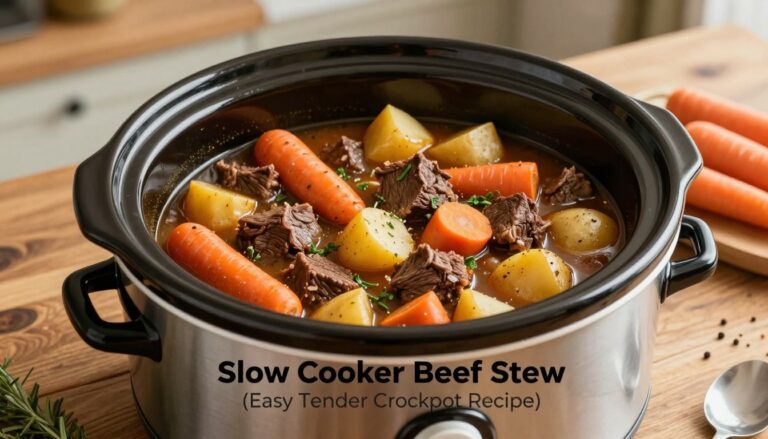
There’s a reason this classic dish is a beloved favorite across the country. It combines tender chunks of meat with hearty vegetables in a rich, savory gravy. The result is a complete, comforting one-pot meal that warms you from the inside out.
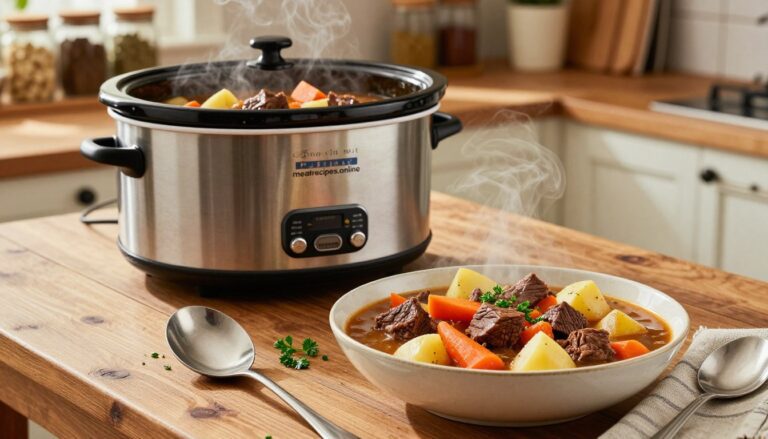
Using a countertop appliance, you can achieve that same fall-apart tenderness and deep flavor. You simply prepare your ingredients in the morning. Come evening, your kitchen will be filled with an irresistible aroma, and dinner is ready to serve.
This guide will walk you through every step. You’ll learn how to select the best cuts and how to layer flavors for a perfect result every time. We make this traditional favorite accessible for your busiest weeknights.
Slow cooking allows flavors to develop gradually, creating a rich and comforting dish. Learn more about how slow cooking works and its benefits.
Table of Contents
Key Takeaways
- Learn how to transform basic ingredients into a hearty, family-friendly comfort meal.
- Follow a clear guide for achieving tender, flavorful results with your countertop appliance.
- Understand why this combination of meat, vegetables, and gravy remains an American classic.
- Enjoy the convenience of preparing your meal in the morning and coming home to a ready-to-eat dinner.
- Adapt traditional cooking techniques for modern, easy-to-use kitchen convenience.
- Get a comprehensive overview from ingredient selection to final serving suggestions.
- Create a dish so good it will become a regular in your yearly meal rotation.
Introduction to Slow Cooker Comfort Meals
There’s a timeless appeal to a dish that combines simple ingredients into something extraordinary. This method brings out the best in everyday components, creating a deeply satisfying experience.
Discovering the Appeal of Classic Beef Stew
For many families, this hearty dish represents the ultimate comfort food. Its rich, savory gravy evokes feelings of home and warmth with every spoonful.
What makes it special is how affordable ingredients transform into a luxurious-tasting dinner. You get exceptional value without sacrificing quality or taste.
Why Slow Cooking Makes a Difference
The countertop appliance works magic on tougher cuts of meat. Extended, gentle heat breaks down connective tissues, yielding fall-apart tender results.
This hands-off approach gives you freedom throughout your day. Flavors marry and intensify over hours of simmering, creating complexity that faster methods can’t match.
You’ll appreciate how the extended cooking time develops that signature, decadent gravy. It coats each ingredient perfectly, making every bite deeply satisfying.
Ingredients and Nutritional Insights
Let’s examine the building blocks that transform simple items into a hearty, satisfying meal. The right combination ensures robust flavor and balanced nutrition.
Choosing quality components makes all the difference. You create a dish that fuels your body and delights your taste buds.
Nutritional Breakdown from Trusted Sources
Each serving delivers substantial energy and essential nutrients. The table below highlights key values from trusted nutritional analysis.
| Nutrient | Amount per Serving | Why It Matters |
|---|---|---|
| Calories | 380-478 kcal | Provides sustained energy for your day. |
| Protein | 38-45 g | Supports muscle maintenance and keeps you full. |
| Fat | 13-18 g | Primary source of healthy monounsaturated fats. |
| Carbohydrates | 27-29 g | Fuels your body and complements the protein. |
| Vitamin A | 5480-7242 IU | Boosts immunity and promotes healthy vision. |
This profile supports a healthy, active lifestyle. The impressive protein content aids muscle repair after exercise.
Vitamins from the vegetables boost your immune system. You get a meal that is as nourishing as it is delicious.
Key Ingredients: Beef, Vegetables, and Spices
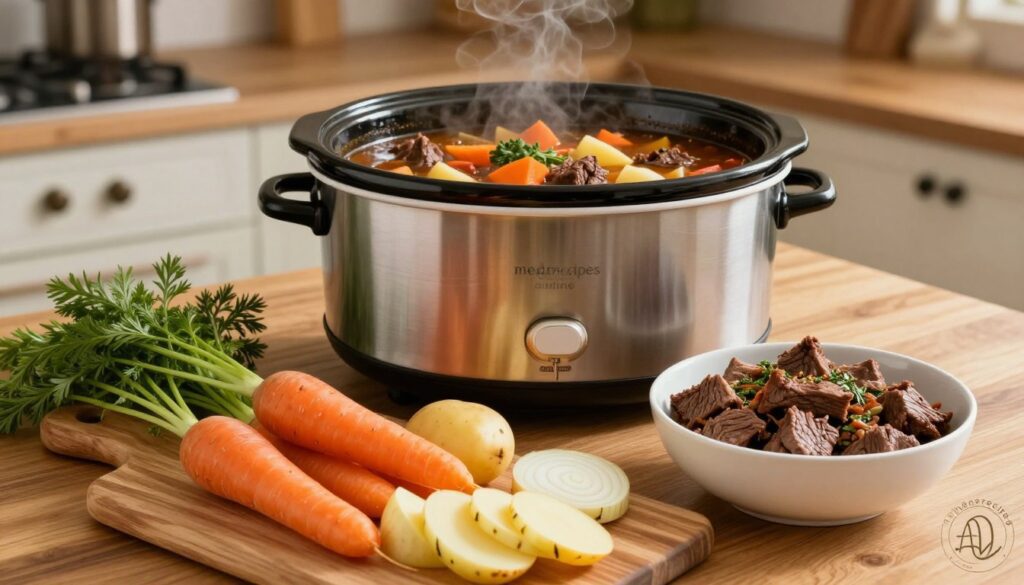
Your foundation starts with two pounds of stew meat. Chuck roast or sirloin work perfectly for tender results.
Potatoes, about three pounds, provide heartiness and essential carbs. Carrots and celery add natural sweetness and satisfying texture.
Aromatic elements like one medium onion and minced garlic build flavor depth. They release their essence during the long cook time.
You’ll need several cups of beef stock for the rich cooking liquid. A few tablespoons of cornstarch help thicken the gravy to perfection.
Preparing the Perfect Beef Stew
Unlock deeper, richer flavors by mastering a few simple techniques before the long simmer begins. These initial steps build a foundation that transforms your final dish.
Essential Pre-Cooking Steps
Your first move is to coat your meat in seasoned flour. This creates a delicious crust during searing. It also helps thicken the gravy later.
To brown or not to brown? This choice defines your meal’s depth. See the comparison below.
| Step | Benefit | Consideration |
|---|---|---|
| Skipping Browning | Saves 15-20 minutes of prep time. | Results in a less complex, paler final dish. |
| Browning the Meat | Creates a gorgeous color and caramelized crust. | Adds significant depth and rich, beefy flavor. |
The Art of Browning Meat for Enhanced Flavor
Start by heating three tablespoons of oil in a large skillet. Use medium-high heat until the oil shimmers.
Work in batches. Add only half your beef at once. Overcrowding causes steaming, not browning.
Sear each piece on both sides. Aim for a golden-brown crust without cooking it through.
“The browned bits left in the pan, called fond, are pure flavor gold,” notes a professional chef.
Transfer the first batch to a plate and repeat. Those fond bits will dissolve into your liquid, enriching the entire stew. This short investment pays off in immense flavor.
crock pot beef stew recipes slow cooker: Key Techniques and Tips
Mastering the temperature and timing transforms your meal from good to unforgettable. These simple principles ensure every component reaches its ideal texture and flavor.
Setting the Right Temperature and Timing
For the best results, you’ll use the low heat setting. Let your dish simmer gently for seven to eight hours. This is the sweet spot for tender, fall-apart meat.
The beauty of this method is its flexibility. If your day runs long, you can extend the cooking time to about ten hours. Your vegetables will become very soft, but the meal will still be delicious.

Do not open the lid during this process. Every peek releases steam and drops the temperature. This can lead to tougher meat, defeating the purpose of the long, slow cook.
“The ‘set it and forget it’ mantra is your best friend for perfect slow cooker beef,” home cooks agree.
Once the main cook is done, cover and switch to the high setting. Let it go for another half hour. This final burst of heat helps thicken the gravy beautifully.
Understanding this relationship between time and temperature is your key to success. Your patience is rewarded with incredible cooker beef that melts in your mouth.
Step-by-Step Cooking Process
The next phase transforms individual components into a cohesive, flavorful meal through careful layering and simmering. You’ll build your dish directly in the appliance, allowing heat and time to work their magic.
First, place your seared meat in the bottom of your six-quart pot. Pour in two to four cups of beef broth to create the cooking liquid. Add diced tomatoes, Worcestershire sauce, and a splash of balsamic vinegar.
Give everything a good stir. The flour from the meat’s coating will begin to dissolve into the broth. This provides some natural thickening power as it simmers.
Sautéing, Simmering, and Thickening
After the long cook, you’ll perfect the gravy’s consistency. The sealed environment means liquid doesn’t reduce like on a stovetop.
Create a thickening slurry by whisking two to three tablespoons of cornstarch with an equal amount of cool water. You can also use a bit of extra beef broth instead of water.
Pour this mixture into your finished dish and stir thoroughly. This prevents lumps and ensures even distribution.
Cover the appliance and switch it to high heat. Let it cook for about thirty minutes. This step activates the cornstarch, transforming thin liquid into a rich, coating gravy.
You can easily adjust the thickness. Use fewer tablespoons in your slurry for a brothier consistency. Add more for a gravy that heavily coats your spoon.
Variations and Flavor Boosters
Unlock new dimensions of taste by experimenting with these proven flavor boosters. A few smart swaps can personalize your dish and elevate its entire profile.
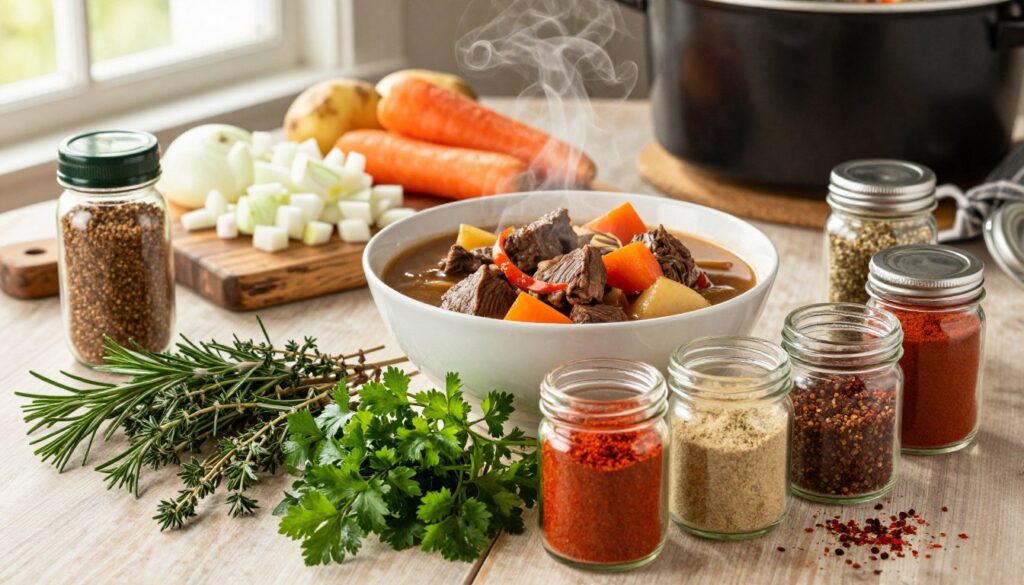
Consider this comparison of traditional choices versus powerful upgrades.
| Ingredient | Traditional Choice | Flavor Booster | Impact |
|---|---|---|---|
| Tomatoes | Regular diced | Fire-roasted diced | Adds a subtle smoky depth. |
| Acidity | None | Balsamic vinegar | Provides remarkable, hard-to-explain richness. |
| Aromatics | Garlic powder | Fresh minced garlic | Offers superior aromatic punch. |
| Seasoning | Salt and pepper | Creole seasoning | Introduces complex layers with one jar. |
Adding Unique Herbs and Spices
Don’t overlook the humble bay leaf. It adds a subtle background flavor that rounds out your meal. Remember to remove it before serving.
For your protein, consider dicing a chuck roast yourself. This often saves a bit of money and lets you control the piece size.
Your veggies are flexible. The classic base includes potatoes, carrots, onion, and celery. You can add parsnips or mushrooms for a custom twist.
Always adjust salt and pepper at the end. Other ingredients like broth contribute sodium, so taste first.
Serving Suggestions and Leftover Storage Ideas
Maximize your culinary effort by pairing your dish with ideal sides and preserving leftovers wisely. These final steps ensure every portion is as enjoyable as the first.
Your creation stands as a complete one-pot meal. The protein and hearty vegetables like potatoes and carrots provide balanced nutrition.
Perfect Pairings: Bread, Biscuits, and Salads
Classic bread is a favorite companion. It soaks up the rich gravy beautifully. Consider these popular options.
| Type of Bread | Description | Best For |
|---|---|---|
| Buttered Slices | Simple, warm, and comforting. | Quick, everyday meals. |
| Homemade Biscuits | Flaky, buttery, and satisfying. | Special dinners or gatherings. |
| Cornbread | Slightly sweet and crumbly. | A Southern-inspired twist. |
You can also serve your recipe over rice for a heartier plate. A fresh green salad adds a crisp contrast.
Tips for Storing and Reheating Your Stew
Cool your meal completely before storage. Transfer it to airtight containers. It keeps well in the fridge for up to three days.
Flavors often improve during this time. For longer storage, freeze portions for up to six months. Leave space in the container for expansion.
Potatoes and carrots continue to absorb liquid. When reheating, you may need to add a splash of broth or water. Use the stovetop for the best results.
Microwave individual portions in a safe bowl. Stir occasionally for even heat. This makes your beef stew perfect for meal prep.
Conclusion
You now possess all the knowledge to transform a simple grocery haul into a nourishing, soul-warming classic. With just a few minutes of active prep, your appliance handles the hours of simmering.
The result is a meal featuring fall-apart tender protein and perfectly cooked vegetables like potatoes and carrots in a rich, savory gravy. The techniques you’ve mastered for building flavor and texture apply far beyond this one dish.
You can confidently create this nutritious, convenient stew any time. It perfectly fits a busy lifestyle while delivering traditional comfort. Your journey to effortless, delicious meals is well underway.
For more easy dinner inspiration, explore our ground lamb recipes Greek collection packed with rich Mediterranean flavors.
FAQ
How long does it take to cook this meal in the appliance?
Is browning the chuck roast really necessary before it goes in the pot?
My gravy turned out too thin. How can I thicken it properly?
Can I add other root vegetables to this dish?
What’s the best cut of meat to use for a tender result?
How should I store and reheat any leftovers?
⭐ Love This Recipe? Tell Us What You Think!
There are no reviews yet. Be the first one to write one.