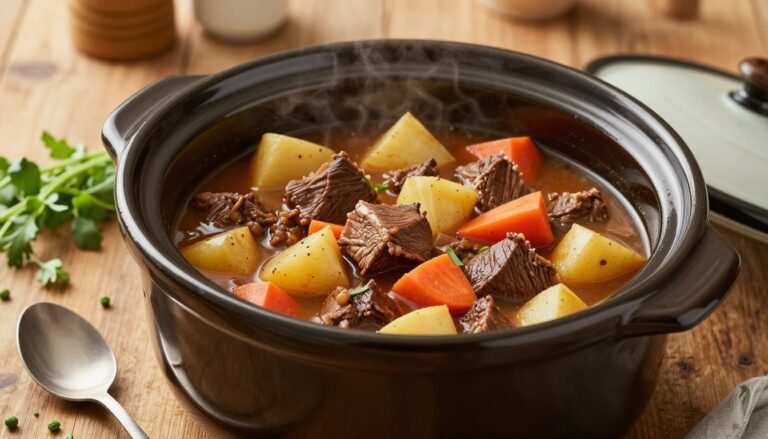
Homemade Beef Stew: Simple and Hearty Slow Cooker Recipe
Homemade beef stew is the ultimate comfort food you can easily prepare at home with simple ingredients and minimal effort.
What if you could create a deeply satisfying, restaurant-quality meal using ingredients already in your kitchen?
This classic homemade beef stew recipe transforms affordable ingredients into a rich, hearty dish perfect for cold weather, family dinners, and cozy nights.
Tender chunks of beef simmer slowly with carrots, potatoes, and onions in a flavorful broth, creating deep, comforting flavors that get even better over time.
You will learn how to make this hearty one-pot wonder. Use a slow cooker for hands-off convenience or traditional stovetop methods.
The beauty lies in its versatility. Prepare it days ahead, freeze portions, or customize it with your favorite vegetables and seasonings.
Master the simple techniques that separate ordinary dishes from exceptional ones. This straightforward guide is for cooks of all levels.
According to USDA guidelines, beef should be cooked to a safe internal temperature to ensure food safety and optimal taste.
Key Takeaways
- Transform basic pantry items into a deeply satisfying and nutritious meal.
- Features tender meat and root vegetables in a rich, savory broth developed through slow cooking.
- Learn restaurant-quality methods using a slow cooker or stovetop for ultimate convenience.
- Highly versatile; easy to prepare ahead, freeze, and customize with your favorite additions.
- Master key techniques for creating exceptional, heartwarming dishes your family will love.
- A complete, hearty one-pot meal that simplifies planning and delivers maximum flavor.
- A straightforward, reliable recipe that becomes a staple in your cold-weather cooking rotation.
Table of Contents
Introduction to Your Hearty Comfort Meal
This one-pot wonder is celebrated globally, with each culture adding its own twist to the timeless formula of meat and vegetables. From Hungarian Goulash to Irish traditions, it’s a universal symbol of nourishment.
The savory aroma that fills your kitchen provides instant comfort. It signals a meal that’s as rewarding to make as it is to eat.
What Makes This Beef Stew Special
You’ll discover the magic starts with a proper sear. Browning the meat creates a caramelized fond in the pan.
This fond is the foundation for a rich, complex sauce. Deglazing with red wine builds incredible depth of flavor.
The result is tender chunks that melt in your mouth. They simmer alongside root vegetables in a deeply savory broth.
Perfect Meal for Colder Weather
This dish is the ultimate defense against chilly days. Its hearty, warming qualities satisfy both body and soul.
It’s a complete meal in a single bowl. You get protein, vegetables, and a delicious sauce with minimal cleanup.
Prepare it on a weekend for effortless weekday dinners. The taste actually improves after a day or two.
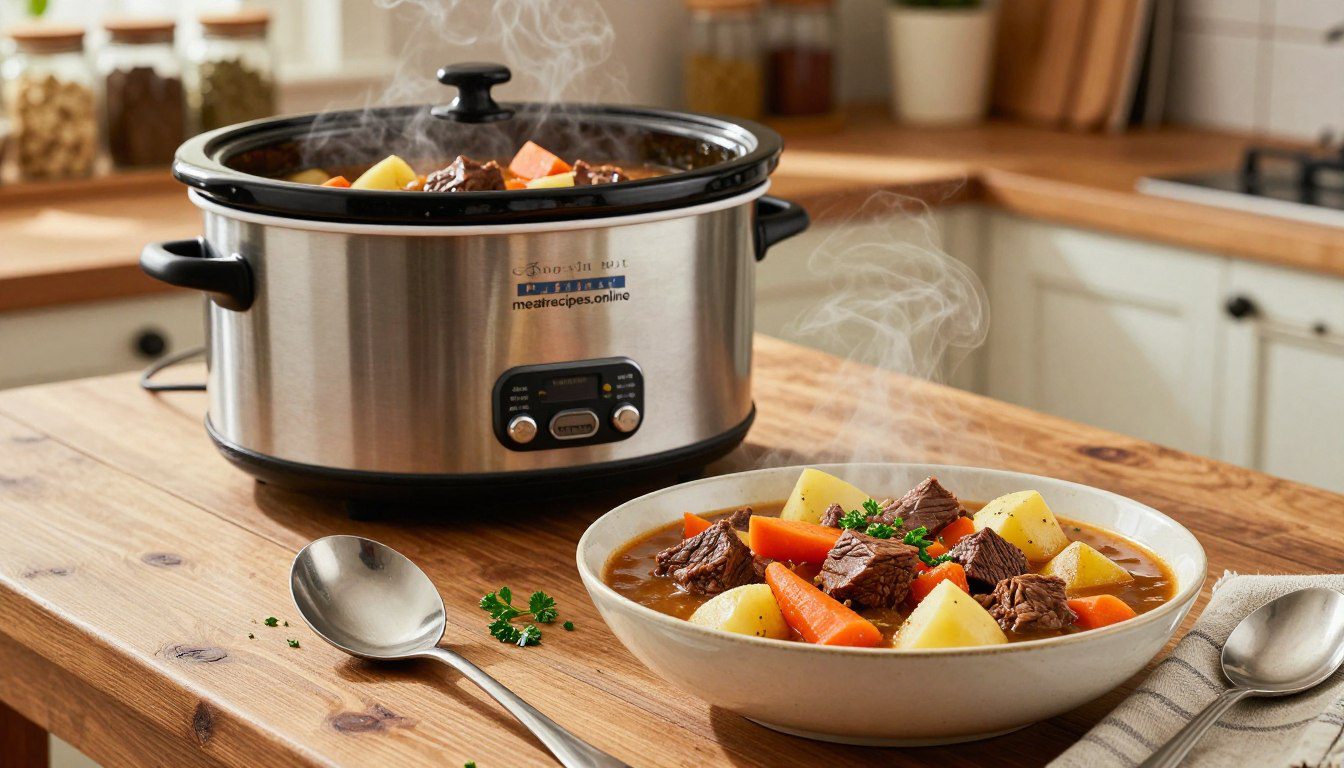
Homemade Beef Stew
Ingredients
Method
- Pat the beef chunks completely dry with paper towels, then season generously with the kosher salt and black pepper.
- For a richer sauce, toss the seasoned beef in a mixture of the all-purpose flour, garlic powder, and a pinch each of salt and pepper.
- Heat the olive oil in a large pot over medium-high heat until shimmering. Sear the beef in about 3 batches, about 5 minutes per batch, turning after 2-3 minutes per side, until a golden-brown crust forms. Add more oil between batches as needed.
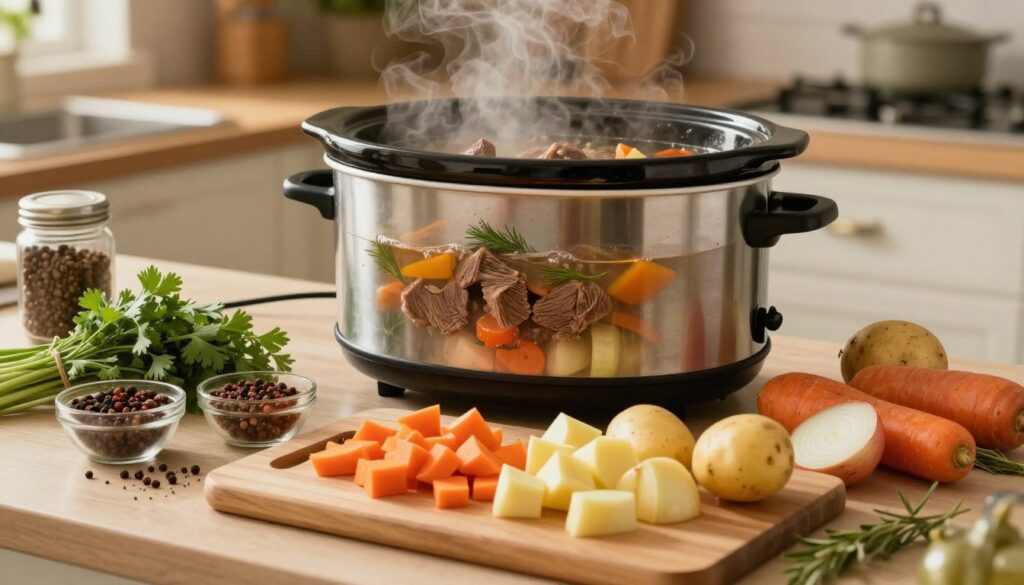
- Place the seared beef and the raw vegetables (onion, potatoes, carrots, celery) into the slow cooker. Add the minced garlic, dried thyme, and bay leaves.
- Combine the beef broth, red wine, and tomato paste, then pour the mixture over the meat and vegetables. Do not add the cornstarch yet.
- Cover and cook on Low for 7-8 hours, until the beef is fork-tender.
- About 30 minutes before serving, whisk the cornstarch with the cold water to make a smooth slurry. Stir it into the bubbling stew and let it cook for 1-2 minutes to thicken the broth.
- Taste and adjust seasoning with additional salt and pepper if needed, then serve hot.
Notes
You can use a slow cooker, Dutch oven, or stovetop. This flexibility makes the classic beef stew fit any schedule.
Essential Ingredients for a Flavorful Stew
Your ingredient choices directly determine the richness and heartiness of the final dish. Quality components build the complex, savory layers you love.
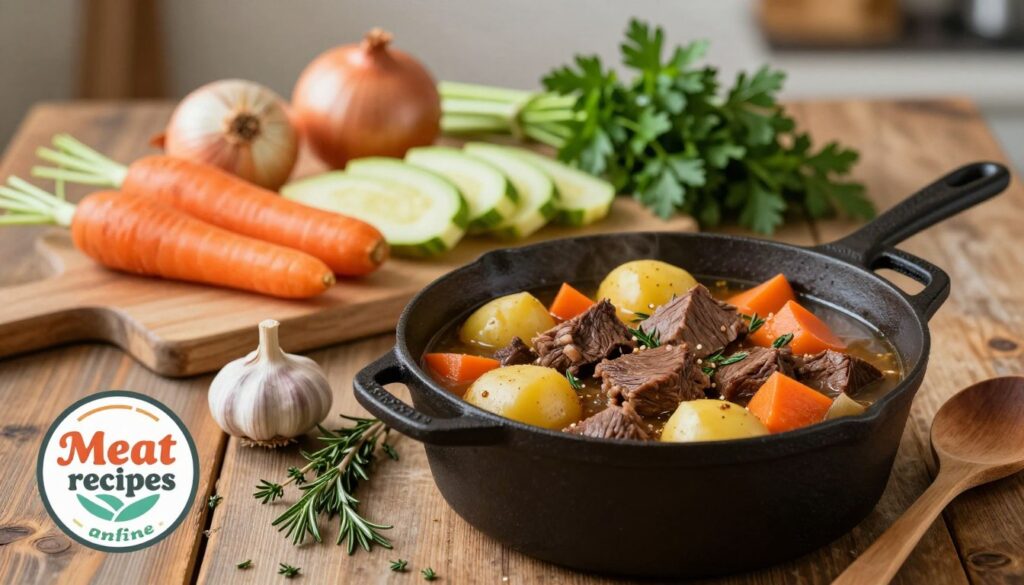
Selecting the Right Beef and Vegetables
Choose well-marbled beef chuck roast from the shoulder. Visible white fat veins keep the stew meat tender during long cooking.
Cube it into 1 to 1½ inch pieces yourself for best results. This ensures even cooking and perfect texture.
For vegetables, pick sturdy classics. Use yellow onion chunks, baby Yukon potatoes, and sliced carrots. Add chopped celery for depth.
| Ingredient | Primary Role | Tip |
|---|---|---|
| Beef Chuck | Provides rich, tender protein base | Look for good marbling |
| Potatoes | Adds heartiness and natural starch | Use waxy varieties like Yukon Gold |
| Carrots | Offers sweetness and color | Slice diagonally for better texture |
| Red Wine | Builds deep, complex flavor | Use a dry wine you’d drink |
| Garlic | Delivers essential aromatic punch | Always use fresh cloves |
Importance of Beef Broth, Red Wine, and Aromatics
The liquid foundation is key. Combine 4 to 6 cups of low-sodium beef broth with 1 cup of dry red wine, like Cabernet.
This creates a deeply savory broth. Aromatics are flavor powerhouses. Mince 4 to 7 cloves of fresh garlic.
Add dried thyme (½ teaspoon) and bay leaves. Use 1 to 1½ tablespoons of tomato paste for richness.
Sear your meat in 2 to 3 tablespoons of olive oil. Season everything well with salt and pepper.
Step-by-Step Guide to Prepare Your Homemade Beef Stew
Your cooking journey begins with two simple but transformative actions: drying and seasoning. This initial prep work is the most critical step for building deep flavor.
Preparing and Seasoning Your Meat
First, pat your meat chunks completely dry with paper towels. Surface moisture prevents proper browning.
Next, season generously. For 2-3 pounds, use 1½ to 2 teaspoons of kosher salt and ½ to 1 teaspoon of black pepper.
For a richer sauce, toss the seasoned beef in a mixture. Combine 3 tablespoons all-purpose flour with ½ teaspoon each of garlic powder, salt, and pepper.
Searing Techniques for Maximum Flavor
Heat 2 to 3 tablespoons of olive oil in a large pot over medium-high heat. Wait until it shimmers.
Never crowd the pan. Brown the meat in small batches for even cooking. This usually means 3 batches.
Cook each batch for about 5 minutes total. Turn pieces with tongs after 2-3 minutes per side. A golden-brown crust should form.
This searing creates “fond,” the tasty brown bits on the pan’s bottom. The fond dissolves later, adding incredible depth to your broth. Add a tablespoon more oil before each new batch.
| Step | Key Action | Purpose & Outcome |
|---|---|---|
| 1. Dry | Pat meat with paper towels | Ensures a proper sear by removing surface moisture |
| 2. Season | Coat with salt and pepper | Builds foundational flavor throughout the cooking process |
| 3. Heat Oil | Heat oil until shimmering | Creates the right environment for immediate browning |
| 4. Sear in Batches | Cook single layer, don’t crowd | Prevents steaming, ensures a crisp crust on every piece |
| 5. Develop Fond | Cook until golden-brown bits form | Provides the base for a rich, complex sauce later |
Slow Cooker Magic: Effortless Cooking at Home
The slow cooker transforms this classic stew into a hands-off, one-pot meal. You achieve deep flavor with minimal active time.
This method is perfect for busy days. Prepare it in the morning and return to a ready dinner.
Setting Up Your Slow Cooker for Success
Begin by searing your meat in a heavy pot or skillet. This step creates caramelized bits for rich taste.
Place the seared meat and raw vegetables into your cooker. Add aromatics like garlic and thyme.
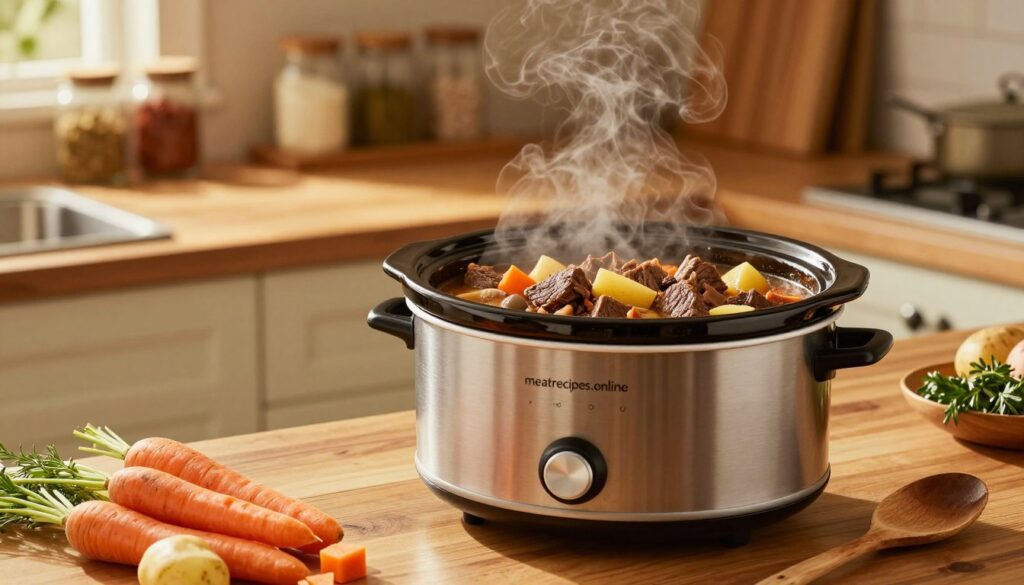
Pour the combined broth and red wine over everything. Do not add flour initially.
Mix flour with water to make a slurry near the end. Stir it in during the last 30 minutes to thicken the sauce.
Timing and Temperature Tips
Your cooking time depends on your schedule. Use low heat for 7 or 8 hours for ideal tenderness.
Choose the high setting for 4 to 5 hours if you’re short on time. The stew simmers perfectly either way. If you’re cooking this specifically in a crock pot, our dedicated slow cooker beef stew recipe walks through crock-pot-specific timing and shortcuts.
For traditional methods, oven braising at 325°F takes about 3 hours. Stovetop simmering in a pot requires occasional stirring.
| Method | Temperature | Total Time | Key Tip |
|---|---|---|---|
| Slow Cooker (Low) | Low Heat | 7-8 hours | Add slurry last 30 minutes |
| Slow Cooker (High) | High Heat | 4-5 hours | Check tenderness after 4 hours |
| Oven Braising | 325°F | 3 hours | Add vegetables after 2 hours |
| Stovetop Simmer | Lowest Setting | 3 hours | Stir to prevent sticking |
Each technique delivers a hearty result. Select based on your available time and equipment.
How to Transform Vegetables and Flour into a Rich Broth
Transforming a thin broth into a luscious gravy is easier than you think. The process relies on natural starches and simple techniques.
You can create a hearty, satisfying sauce without complicated steps. Let’s explore the best methods.
Naturally Thickening with Potato Starches
Your dish will thicken naturally as it cooks. The potatoes release starch into the hot broth over time.
The flour coating from the beef also dissolves. This helps create a gravy-like consistency.
For a rustic texture, mash some cooked vegetables against the pot’s side. This releases more starch quickly.
Creating the Perfect Cornstarch Slurry
For extra thickness, a cornstarch slurry works wonders. Combine two tablespoons each of cornstarch and cold water.
Stir until completely smooth. If it sits, cornstarch settles to the bottom. Give it a quick stir before using.
Pour the slurry gradually into your bubbling stew. Stir constantly as you add it.
Let it boil for one to two minutes. This cooks the starchy flavor and activates its power.
For more flavor, use low-sodium broth instead of water. The result is a rich, velvety sauce.
| Thickening Method | Ratio / Technique | Best For |
|---|---|---|
| Potato Starch | Natural release from simmering potatoes | Foundational, subtle thickening |
| Cornstarch Slurry | 2 tbsp cornstarch + 2 tbsp cold liquid | Quick, precise thickening at the end |
| Butter-Flour Paste | 2 tbsp butter + 2 tbsp flour | Adding richness and body while simmering |
| Vegetable Mash | Gently mashing cooked veggies | Rustic, chunky texture |
homemade beef stew: Bringing Classic Comfort to Your Table
The secret to a truly memorable stew lies in two humble ingredients: a splash of red wine and a spoonful of tomato paste. These elements work in harmony to build a foundation of deep, savory complexity.
Infusing Depth with Red Wine and Tomato Paste
Choose a dry red wine like Cabernet Sauvignon or Merlot. You don’t need an expensive bottle, just one you’d enjoy drinking. The alcohol cooks off, leaving a rich, rustic flavor behind.
A splash of red wine or balsamic vinegar helps lift the tasty browned bits from your pan. This adds a bright acidity that perfectly balances the dish.
Next, focus on the tomato paste. Cook a tablespoon or two with your softened onions for a full minute. This simple step caramelizes the paste, unlocking its umami power and natural sweetness.
| Ingredient | Primary Contribution | Pro Tip |
|---|---|---|
| Dry Red Wine | Adds bold, rustic depth and acidity | Use about 1 cup; the rest is for the cook! |
| Tomato Paste | Provides savory umami and helps thicken the sauce | Cook it briefly with onions to remove any raw taste. |
| Vinegar (Optional) | Deglazes the pan and brightens the overall flavor | 2 tablespoons of red wine or balsamic vinegar works perfectly. |
If you prefer to skip the wine, use an equal amount of extra broth. The tomato paste will still provide wonderful depth. The long, slow simmer allows all these flavors to meld into a harmonious, complex sauce.
Serving Suggestions and Nutritional Insights
Serving your creation is just as important as cooking it. The right accompaniments can elevate every bowl from simple to spectacular.
This dish is a complete meal. You get balanced nutrition with protein, vegetables, and a rich broth in one pot.
Ideas to Complement Your Stew
The best way to enjoy the savory sauce is with bread. Crusty options soak up every delicious drop.
- 30-minute dinner rolls or homemade buttermilk biscuits
- Artisan bread, popovers, or garlic crescent rolls
- A bed of egg noodles, creamy mashed potatoes, or polenta
- Crushed crackers or saltines for a simple crunch
For extra heartiness, ladle it over more potatoes. This recipe is versatile and welcomes your favorite sides.
Nutritional values per serving support its role as a nourishing dinner. Here are the key details:
| Nutrient | Approximate Range | Key Benefit |
|---|---|---|
| Calories | Varies by ingredients | Provides sustained energy |
| Protein | Varies by ingredients | Supports muscle health |
| Carbohydrates | Varies by ingredients | Includes fiber from the vegetables |
| Vitamin A | Varies by ingredients | Primarily from carrots |
| Vitamin C | Varies by ingredients | Boosts immunity |
You also get iron, calcium, and potassium. This beef stew recipe delivers substantial nourishment.
Store leftovers in an airtight container. They keep in the fridge for 3 to 4 days.
The stew may thicken when chilled. Add a splash of water when reheating to adjust consistency.
This recipe freezes well for up to 3 months. It’s perfect for batch cooking and easy future meals.
Many recipes exist, but this reliable stew recipe earns consistent praise. It’s a beef stew you’ll make again and again.
If you enjoy this homemade beef stew, you might also love trying other delicious recipes on our website. Check out our easy boneless pork chop recipes for a quick dinner idea or explore our flavorful taco meat seasoning guide to enhance your meals with bold spices.
These recipes are perfect for anyone looking to expand their home cooking skills and discover new comforting dishes.
Avoiding Common Pitfalls in Beef Stew Preparation
Even experienced cooks can stumble into simple traps that undermine their stew’s potential. Recognizing these errors ensures your meal turns out tender and flavorful every time.
Avoid crowding your pot when searing the meat. Too many pieces at once will steam instead of brown. Cook in batches for a proper golden crust.
Heat your oil until shimmering before adding the beef. Let each side cook undisturbed for 2 to 3 minutes. This allows a good sear to form.
If your beef isn’t tender after the first hour, don’t worry. Cover the pot and simmer longer. It may need up to 90 minutes total.
Choose well-marbled chuck over lean cuts. The fat keeps the meat juicy. Always deglaze the bottom of your pan to capture flavorful bits.
Add carrots and potatoes in the last half hour. This prevents mushiness. Maintain a gentle heat throughout to avoid toughening.
Finally, let your dish rest. The flavors improve if made a day ahead. Patience rewards you with a deeper, more harmonious taste.
Innovative Variations to Elevate Your Stew
Your classic dish becomes a canvas for creativity with simple ingredient swaps and equipment choices. Personalizing the recipe keeps it exciting and perfectly suited to your taste.
Exploring Different Cuts and Vegetable Options
While chuck roast is standard, experiment with other well-marbled cuts. Use about 2 to 3 pounds of meat for a batch serving six to eight people.
Your dutch oven is ideal for stovetop-to-oven cooking. A heavy stockpot or slow cooker also works perfectly.
Swap white potatoes for turnips or parsnips. These lower-carb options have a similar hearty texture.
Any dense root vegetables will work. This is a great way to use leftover roasted potatoes or glazed carrots.
Add 2 to 3 cups of unique veggies for appeal. Try pearl onions, butternut squash, or Brussels sprouts.
Use fresh thyme sprigs instead of dried. About 1 teaspoon fresh equals half a teaspoon dried.
Rosemary also pairs beautifully with stew meat. For richer flavor, use avocado oil or bacon fat.
Heat your dutch oven over medium-high heat with 2 to 3 tablespoons of your chosen oil.
Advanced cooks can add 1 cup of porter beer for depth. A dash of Worcestershire sauce adds a savory note.
Storing and Reheating Beef Stew
Beef stew is one of the few dishes that genuinely tastes better the next day. Let it cool for no more than two hours, then transfer it to an airtight container. It keeps in the fridge for 3 to 4 days.
Freezing Beef Stew
Stew freezes well for up to 3 months, but leave the potatoes out if you plan to freeze it. Potato turns grainy and watery once thawed. Freeze the stew without them and add freshly boiled potatoes when you reheat. Label the container with the date, and thaw overnight in the fridge rather than at room temperature.
The Best Way to Reheat
The stovetop gives the best result. Warm the stew over medium-low heat with a splash of beef broth or water, stirring now and then, until it is hot all the way through. The microwave works for a single bowl — heat in one-minute bursts and stir between each one so it warms evenly.
Conclusion
With these techniques now in your repertoire, you can confidently craft a deeply satisfying meal that defines comfort food. You have mastered the simple methods that create restaurant-quality results. Proper searing, patient simmering, and smart vegetable timing are your new standards.
The time you invest pays off with incredibly tender meat and complex flavor. This dish often tastes even better the next day. Your patience during cooking is always rewarded.
This versatile recipe adapts to your schedule and kitchen tools. It works perfectly in a Dutch oven, on the stovetop, or in a slow cooker. Feel free to swap vegetables or adjust seasonings to make it your own.
You are now equipped to transform basic ingredients into a legendary family dinner. This homemade beef stew is more than just a meal. It is a heartwarming tradition you can share for years to come.
FAQ
Can I make this recipe without a slow cooker?
What’s the best cut of meat to use?
Why is searing the meat so important?
My stew broth is too thin. How can I thicken it?
Can I substitute the red wine?
How long can I store leftovers?
⭐ Love This Recipe? Tell Us What You Think!
There are no reviews yet. Be the first one to write one.