Stew Meat Crock Pot Recipe: Tender Slow Cooker Beef Stew
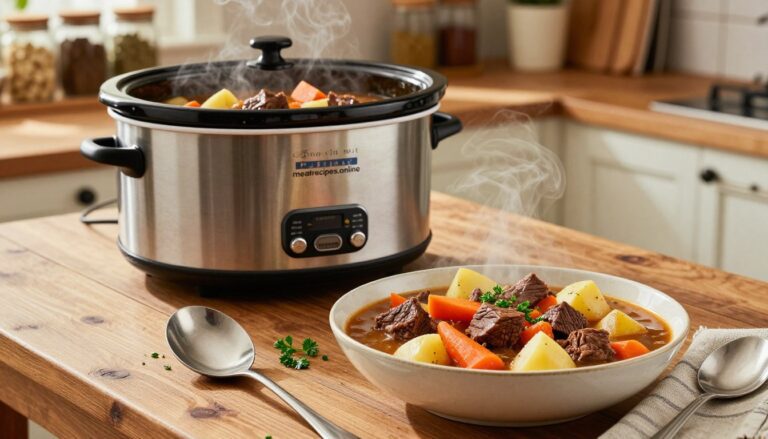
Stew meat crock pot recipes are the easiest way to make a tender, flavorful slow cooker beef stew with minimal effort. What if you could create a restaurant-quality, comforting meal with almost no active cooking time?
Imagine coming home to a kitchen filled with the irresistible aroma of a simmered dish. The tender beef and flavorful vegetables have been melding together for hours. This is the magic of hands-off cooking.
This guide unlocks the secrets to a perfect, hearty meal. You will learn a method that requires minimal effort for maximum flavor. It’s ideal for busy weeknights or relaxed weekend cooking.
The process is beautifully simple. You combine robust ingredients in your appliance. Then, gentle heat works its magic over several hours. The result is a deeply satisfying, one-pot wonder.
Whether you’re a cooking novice or an experienced home chef, this formula delivers. It guarantees succulent, fall-apart beef every single time. You’ll also discover clever variations and professional tips for customization.
From selecting the right cut to achieving the perfect sauce consistency, we cover everything. Get ready to master a classic comfort food that feels both special and effortless.
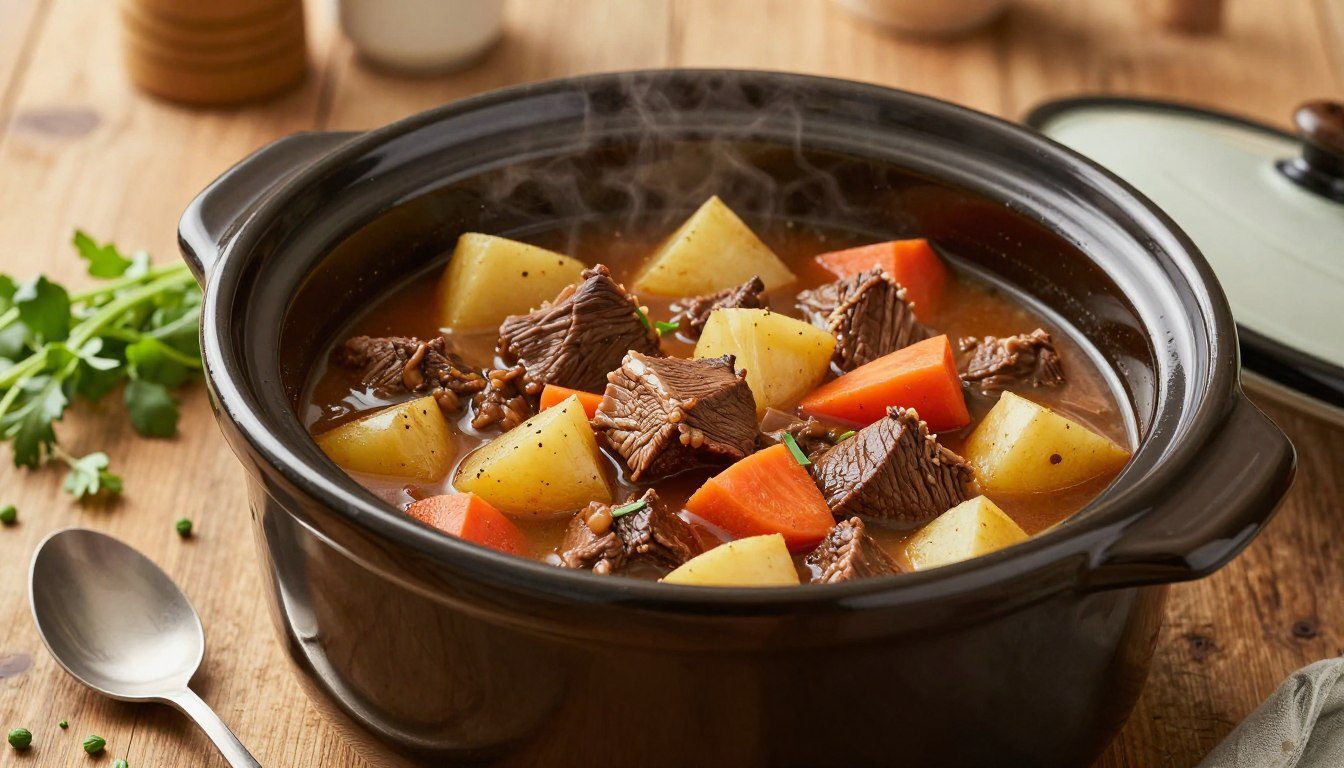
Stew Meat Crock Pot
Ingredients
Equipment
Method
- Brown the beef: Coat the beef chuck pieces in flour. Heat a drizzle of oil in a large skillet over medium-high heat and brown the beef in small batches on all sides, transferring each browned batch to the slow cooker.
- Layer the vegetables: Place the carrots and mushrooms on top of the browned beef in the slow cooker. Season with salt and pepper.
- Build the sauce: In the same skillet, add the diced onion and scrape up the browned bits from the bottom. Pour in the beef broth and red wine if using, then stir in the balsamic vinegar, Dijon mustard, and minced garlic. Pour the sauce over the contents of the slow cooker and top with the fresh rosemary sprigs.
- Slow cook: Cover and cook on LOW for 7-8 hours or HIGH for 3-4 hours, until the beef shreds easily with two forks.
- Thicken the sauce: Near the end of cooking, whisk the arrowroot powder or cornstarch with the water (or a cup of hot stock from the cooker) until smooth, then stir the slurry into the stew and let it thicken.
- Finish and serve: Stir in the frozen peas during the last 10 minutes if using. Serve hot, on its own or over mashed potatoes or cauliflower.
Notes
Key Takeaways
- This method transforms basic ingredients into a deeply flavorful and comforting dish with minimal hands-on work.
- The long, gentle cooking process ensures exceptionally tender beef that falls apart easily.
- It’s an ideal solution for busy schedules, as you can prepare it in the morning and have dinner ready when you get home.
- You will learn a foundational recipe that can be easily customized with different vegetables, herbs, and broths.
- Properly browning the beef before slow cooking (if your time allows) adds a rich, deep layer of flavor to the final dish.
- This cooking technique is forgiving and reliable, making it perfect for both beginners and experienced cooks.
Table of Contents
Introduction to Your Hearty Beef Stew
Cold weather brings a natural craving for hearty, slow-simmered dishes that comfort both body and soul. This particular beef stew recipe is celebrated as the best for good reason. It delivers a savory, rich-but-not-heavy flavor profile that will have everyone asking for your secret.
It’s healthy comfort food built from simple ingredients. The method requires minimal effort from you. It’s perfect for a busy weeknight or a relaxed dinner party.
Discover the comfort of slow cooking
The comfort of this method is twofold. First, your kitchen fills with an inviting aroma all day. Second, you get to enjoy a complete meal without being tied to the stove.
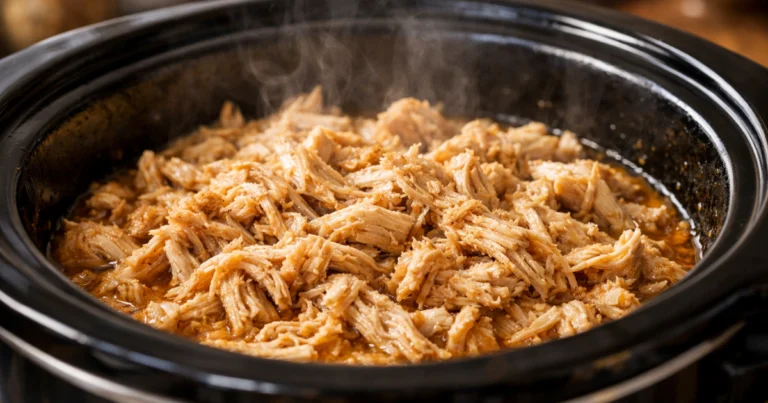
Gentle, all-day heat works magic on tougher cuts of beef. It breaks down connective tissue thoroughly. The result is meat so tender it falls apart with a fork.
Why this recipe works for you
This recipe is exceptionally versatile. It fits gluten-free, dairy-free, paleo, and Whole30 lifestyles seamlessly. You get a deeply satisfying meal that accommodates nearly any dietary need.
The long cooking time allows for incredible flavor development. Ingredients meld together into something complex and special. It feels gourmet but is incredibly simple to achieve.
| Feature | Benefit to You | Ideal Scenario |
|---|---|---|
| Minimal Active Time | Set it in the morning, dinner is ready at night | Busy weekdays |
| Deep Flavor Development | Rich, savory taste that improves over time | Dinner parties |
| Dietary Flexibility | Naturally fits many healthy eating plans | Family meals with restrictions |
| Nutrient-Dense Balance | Hearty and filling without being overly heavy | Seeking wholesome comfort food |
Gathering Your Ingredients
Before the slow simmer begins, a thoughtful selection of fresh, robust ingredients sets the stage.
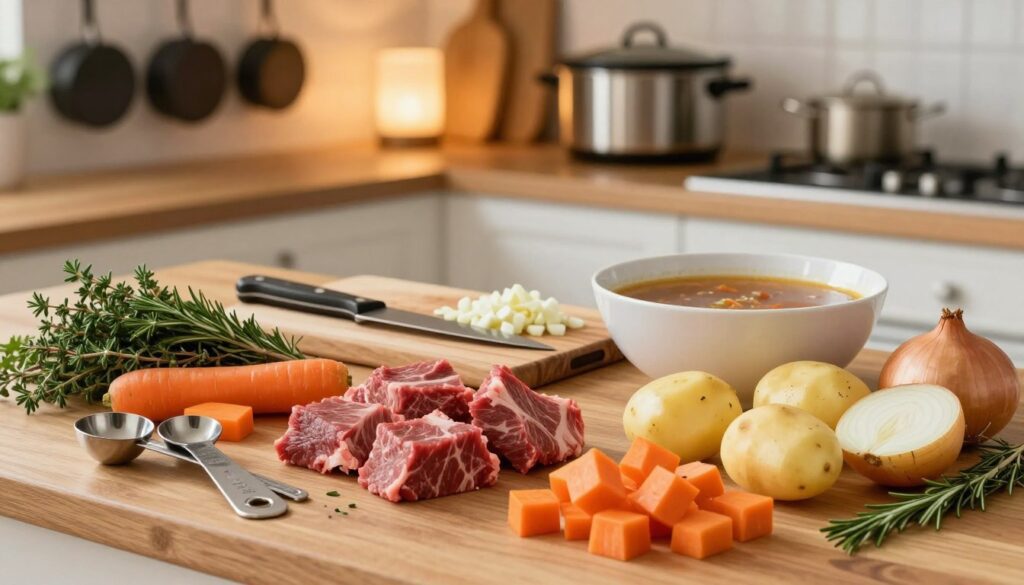
Essential Meats and Vegetables
Start with 2 to 3 pounds of beef chuck roast. This cut is perfect for long cooking. Its marbling keeps the meat juicy and transforms it into tender bites.
Classic vegetables build the body of your dish. You will need one pound of carrots and a couple of large russet potatoes. Add a sweet onion and a few ribs of celery for foundational flavor.
Spices and Secret Sauce Components
The deep, savory taste comes from your liquid ingredients. Use two cups of rich beef broth as the base. Stir in a tablespoon of balsamic vinegar and two teaspoons of Dijon mustard.
Aromatics like minced garlic and fresh rosemary add wonderful layers. For a thick, glossy sauce, have arrowroot powder or cornstarch ready. Season simply with sea salt and black pepper.
Understanding the Stew Meat Crock Pot
For a dish that develops deep flavor while you go about your day, the design of a slow cooker is unmatched. This appliance is engineered for one primary purpose: transforming simple ingredients through patient, gentle heat.
What makes a crock pot ideal for beef stew
Your slow cooker maintains a steady, low temperature for many hours. This consistent heat is essential. It slowly breaks down tough fibers in the meat, resulting in incredibly tender bites.
The sealed lid creates a moist, braising environment. Steam and juices circulate but cannot escape. This process keeps every ingredient succulent and prevents them from drying out.
You enjoy complete hands-off convenience. Prepare everything in the morning, set it, and forget it. Even heat distribution means no stirring is needed to avoid burning.
The extended cooking time is not a drawback but a secret weapon. Flavors from the broth, vegetables, and herbs meld and intensify. This creates a depth of taste that faster methods cannot achieve.
You can also make large batches with ease. Fill your pot up to three-quarters full for meal prep or a crowd. This flexibility makes the classic beef stew a practical staple.
Preparing the Beef and Vegetables
Achieving that rich, caramelized crust on your protein is the first step to unlocking complex flavors. This stage of prep builds the savory foundation for your entire dish.
How to properly brown the beef
Begin by heating a drizzle of oil in a large skillet over medium-high heat. Before adding your beef, coat each piece thoroughly with flour. This creates a beautiful crust and helps thicken the sauce later.
Working in small batches is crucial. Add only a few pieces of beef to the hot skillet at a time. This ensures each piece sears properly instead of steaming.
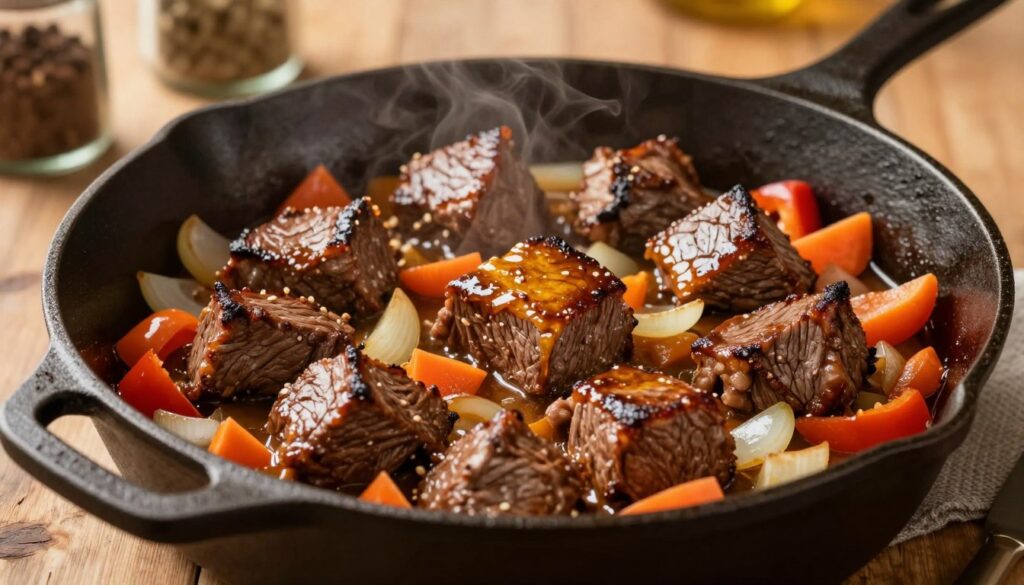
Do not rush this step. Let the beef develop a deep brown color on all sides. The Maillard reaction here creates incredible flavor. Transfer each browned batch to your slow cooker and repeat.
Tips for chopping and seasoning vegetables
Uniform cuts ensure your vegetables cook evenly. Cut carrots into 1-inch pieces. Halve mushrooms, dice onions, and chop celery into similar sizes.
Wash, peel, and chop potatoes to match. After browning the beef, place carrots and mushrooms right on top in the cooker. This layering promotes perfect texture.
Season your vegetables simply with salt and pepper as you prep. Their natural sweetness will shine through during the long cook.
Creating a Flavorful Broth and Sauce
Your skillet, still holding the fond from browning, becomes the starting point for a deeply flavorful sauce. This is where you build the liquid foundation that will transform your ingredients.
Using Beef Broth and Red Wine for Depth
Add diced onion to the hot pan. Stir to scrape up all the flavorful browned bits. This fond contains concentrated, savory essence.
Pour in two cups of beef broth. For a richer taste, use beef bone broth. You can also add a half cup of red wine now.
The red wine adds wonderful complexity. It balances the richness with a subtle acidity.
Mixing in Balsamic, Dijon Mustard, and Aromatics
Next, stir in your “secret sauce” components. Add one tablespoon of balsamic vinegar and two teaspoons of Dijon mustard. These ingredients create a harmonious, tangy-sweet base.
Mix in two teaspoons of minced garlic for aromatic flavor. Pour this entire sauce mixture over the contents of your cooker. Finally, place fresh rosemary sprigs on top.
| Ingredient | Flavor Contribution | Best Use Case |
|---|---|---|
| Beef Bone Broth | Richer, silkier mouthfeel, more protein | Elevating everyday meals |
| Red Wine (½ cup) | Depth, complexity, balancing acidity | Special occasions or deeper flavor |
| Balsamic Vinegar | Sweet tang, caramelized notes | Essential for the signature sauce |
| Dijon Mustard | Sharp, herbal undertones | Adding a subtle flavor layer |
| Fresh Rosemary | Woody, aromatic herbal notes | Infusing the entire dish |
Mastering Slow Cooking Techniques
Unlocking the full potential of your appliance requires mastering two simple temperature options. Your slow cooker is designed to transform ingredients through patient heat. Understanding these settings ensures perfect results every time.
Low and slow settings for tender results
Your slow cooker offers two primary modes: HIGH for 3-4 hours or LOW for 7-8 hours. Both methods yield fork-tender beef. Choosing to cook low maximizes flavor development.
When you use the LOW setting, the extended time breaks down connective tissue thoroughly. This creates the most succulent texture. The HIGH setting is ideal for a quicker meal.
You’ll know your beef stew is done when the beef shreds easily with two forks. This indicates perfect tenderness.
Managing time and temperature in your slow cooker
Resist lifting the lid during cooking. Each peek adds 15-20 minutes to your total time. Trust the process.
These methods are forgiving. An extra 30 minutes won’t ruin your meal. However, significantly longer hours may overcook vegetables.
Note that some slow cooker models run hotter. Adjust your hours slightly after your first try. This ensures ideal texture for your dish.
Alternative Cooking Methods: Dutch Oven & Stove Top
Don’t let the lack of a specific appliance stop you from enjoying this deeply satisfying meal. The recipe is wonderfully adaptable.
You can achieve the same tender, flavorful results using equipment you already own. This flexibility ensures a delicious dinner is always within reach. If you’d like to compare stovetop and oven timing side by side, our full homemade beef stew guide covers those methods in more detail.
Adapting the recipe for a Dutch oven
Use a heavy Dutch oven for a one-pot approach. Brown your beef directly in this vessel.
Then, build your sauce in the same pot. Cover it tightly and transfer to a 300°F oven.
Step-by-step guide for stove top cooking
For stove top cooking, follow the same initial prep steps. Use a large, heavy-bottomed pot.
After browning, add all ingredients. Bring the liquid to a gentle simmer.
Maintain this low bubble for two to three hours. Check occasionally to prevent sticking.
An Instant Pot offers a speedy alternative. Use the SAUTE function, then pressure cook for just 40 minutes.
| Method | Total Time | Critical Tip |
|---|---|---|
| Dutch Oven | ~3 Hours | Keep covered in oven for moist, even braising. |
| Stove Top | 2-3 Hours | Monitor heat to maintain a steady, gentle simmer. |
| Instant Pot | ~1 Hour | Use a slurry to thicken sauce after pressure release. |
Each technique yields an excellent beef stew. Choose based on your time and available cooker.
Your classic beef stew is no longer tied to one pot. This adaptability makes the dish a true kitchen staple.
Tips for Achieving Perfect Texture
Transforming a thin broth into a luscious, spoon-coating sauce is easier than you think. The flour used during browning provides a start, but often needs a boost.
Thickening your stew naturally
For a paleo-friendly option, use arrowroot powder. Whisk two tablespoons with two tablespoons of water until smooth.
Pour this slurry into your appliance and stir. It thickens almost immediately, creating a velvety finish.
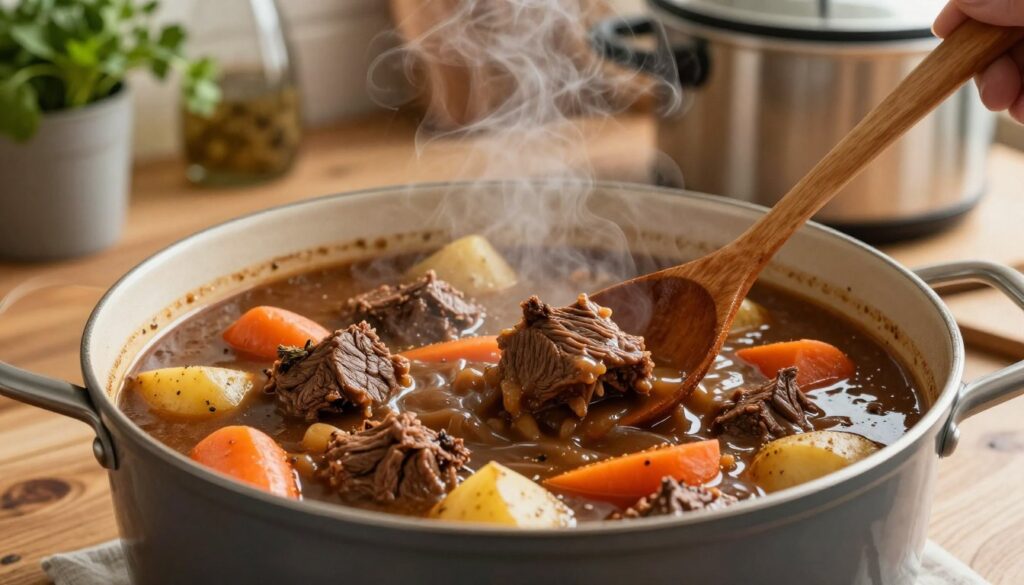
If dietary rules allow, cornstarch is a reliable choice. Remove about one cup of hot stock from the cooker.
Whisk in two tablespoons of cornstarch until dissolved. Pour it back in and let it sit for 5-10 minutes.
| Thickener | Best For | Method | Activation Time |
|---|---|---|---|
| Arrowroot Powder | Paleo, Whole30 diets | Mix with cold water, stir in | Instant |
| Cornstarch | General use, easy results | Mix with hot stock, return to pot | 5-10 minutes |
| Flour (from browning) | Base thickening, flavor | Coated on beef before cooking | Throughout cook time |
Always add your thickener at the end. This prevents starch breakdown during long cooking. Your sauce will stay perfectly glossy.
Nutrition and Serving Suggestions
Every serving of this hearty creation packs a powerful nutritional punch alongside its comforting flavor. Let’s explore what makes this meal so wholesome and how to present it for maximum enjoyment.
Breaking down the nutritional highlights
This dish is a balanced source of energy and essential nutrients. One bowl provides substantial protein for satisfaction and muscle support.
You also get healthy carbohydrates and fats. The fiber content aids digestion. Micronutrients like Vitamin A and potassium are abundant.
| Nutrient | Regular Version | Paleo Version | Key Benefit |
|---|---|---|---|
| Calories | 380 kcal | Varies by ingredients | Sustained energy |
| Protein | Varies by ingredients | Varies by ingredients | Muscle support & satiety |
| Carbohydrates | Varies by ingredients | Varies by ingredients | Primary from vegetables |
| Fiber | Varies by ingredients | Varies by ingredients | Digestive health |
| Vitamin A | Varies by ingredients | Varies by ingredients | Vision & immune function |
Ideas for pairing your stew with sides
For a classic presentation, serve this creation in deep bowls. Let the rich broth and tender ingredients stand alone.
You can also spoon it over creamy mashed potatoes. Yukon gold potatoes are an excellent choice. Their buttery flavor complements the savory notes perfectly.
For a lighter option, use mashed cauliflower. It maintains the comfort food feel with fewer carbs.
Balance the richness with a fresh salad. A mix with pears adds a bright, acidic contrast.
Stir in frozen peas right before serving. They add color, sweetness, and extra nutrition.
Store leftovers in an airtight container. They keep for 3-4 days in the fridge and freeze well for up to two months.
Enhancing with Complementary Flavors
Your creation becomes a canvas for personal expression through thoughtful vegetable additions. The beauty of this method lies in its incredible versatility. You can customize it based on what you have on hand or what’s in season.
Adding extra veggies or herbs
The only real limit is the size of your appliance. Keep it no more than three-quarters full for best results. Popular vegetables include extra celery for crunch and diced potatoes for heartiness.
Sweet potatoes and parsnips add a subtle sweetness. You can enhance the aromatic base with more onions or varieties like shallots. These contribute layers of savory depth.
Increase fresh garlic if you love pungent, aromatic notes. It intensifies the overall flavor profile. Add greater quantities of carrots for their natural sweetness and color.
Fresh rosemary is highly recommended. Use two to three sprigs. You can also experiment with thyme or bay leaves for your signature flavor combination.
Season with sea salt and black pepper to your personal taste. Adjust after cooking when you can properly taste the fully developed flavor.
For a final boost, add frozen peas during the last ten minutes. They contribute bright color and nutrition without becoming overcooked.
Remember a key timing tip. Hearty vegetables like potatoes and carrots go in at the beginning. Delicate additions like peas work best near the end.
Conclusion
Your 20 minutes of prep yields a complete meal that simmers unattended.
Choose the HIGH setting for 3-4 hours or LOW for 7-8 hours. Your slow cooker does the work while you live your life. Total hands-off time ranges from just over three to eight hours.
This comprehensive recipe feeds eight people a hearty, nutritious dinner. The techniques you mastered—like browning beef and building sauce—apply to many other cooker beef dishes.
You now have a reliable, go-to meal that blends convenience, nutrition, and deep comfort. This slow cooker beef stew delivers maximum reward for minimal effort every time.
Looking for more easy dinner ideas? Check out these pork chop recipes skillet that are perfect for busy weeknights and packed with flavor.
FAQ
Do I really need to brown the beef before putting it in the slow cooker?
Can I make this recipe without red wine?
My sauce is too thin. How can I thicken it quickly?
Can I cook this on high heat instead of low?
What are the best potatoes to use so they don’t turn to mush?
Can I prepare the ingredients the night before?
Is it safe to leave my slow cooker on while I’m at work?
What can I use instead of Dijon mustard?
⭐ Love This Recipe? Tell Us What You Think!
There are no reviews yet. Be the first one to write one.