Skillet Pork Chops: Easy Pan-Seared Recipe
Can simple pork chop recipes skillet methods turn a weeknight into a gourmet moment? You might think great flavor needs long prep or fancy gear, but you can achieve a restaurant-worthy sear in minutes with the right technique.
This skillet method is a reliable choice for keeping meat juicy and tender, using a short ingredient list you likely already have on hand.
With a few basic ingredients—garlic, salt, pepper, butter—and a hot pan, you can build a golden crust that locks in flavor. We’ll show the best cooking time and temperature, how to pick the right oil and fat, and tips to avoid drying out the center.
Serve these chops with mashed potatoes or fresh sides for a quick dinner that feels special. Ready to learn the simple steps that make every bite count?
Key Takeaways
- Follow a reliable, tested method for juicy results.
- Simple ingredients like garlic and butter create a rich crust and bold flavor.
- Manage time and temperature in the pan to keep the center tender.
- Each serving is high in protein and fits a family dinner plan.
- Pair with mashed potatoes or fresh sides for a complete meal.
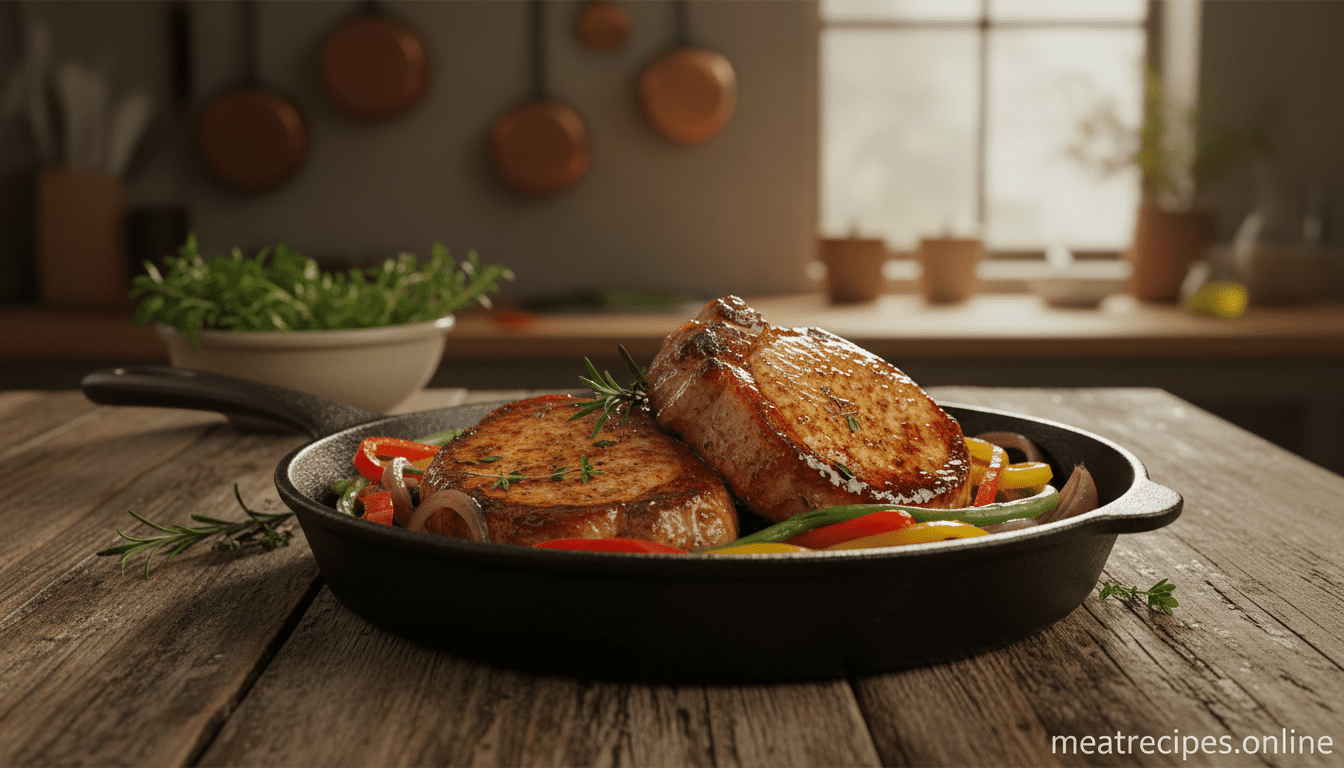
Pork Chop Recipes Skillet
Ingredients
Equipment
Method
- Remove the pork chops from the refrigerator and let them rest at room temperature for about 30 minutes.
- Pat the pork chops dry with paper towels.
- Season all sides with salt, black pepper, and garlic.
- Heat a heavy 12-inch skillet over medium-high heat until hot.
- Add a small amount of avocado oil or canola oil.
- Place the pork chops in the hot skillet without overcrowding the pan.
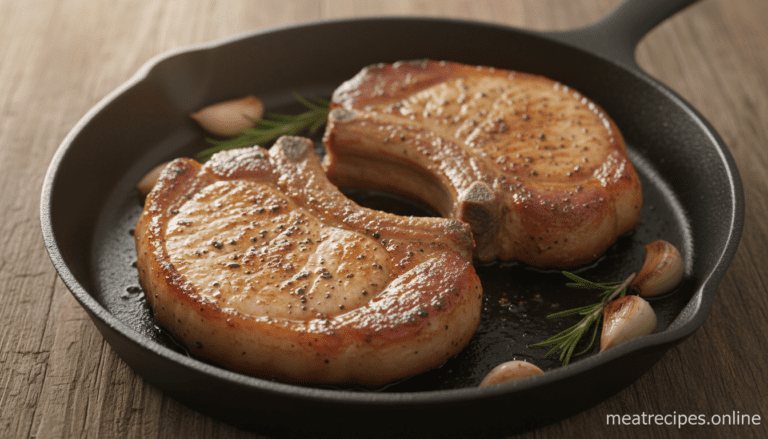
- Sear for 3–5 minutes per side without moving them so a golden crust develops.
- After flipping, reduce the heat to low and cover the skillet.
- Continue cooking until the thickest part of the pork reaches an internal temperature of 145°F.
- Remove the pork chops from the skillet and let them rest for at least 5 minutes before serving.
- For an optional pan sauce, remove excess fat from the skillet and return it to medium-high heat.
- Deglaze with 1/2 cup chicken stock and a splash of apple cider vinegar.
- Add 1–2 teaspoons honey and scrape up the browned bits from the pan.
- Finish the sauce with 1 tablespoon butter and spoon it over the pork chops.
Notes
Sear for 3–5 minutes per side.
An inch-thick pork chop takes roughly 8–12 minutes total cooking time.
Cook until the internal temperature reaches 145°F.
Rest the pork chops for at least 5 minutes before serving.
Bone-in chops may cook slightly slower than boneless chops.
Refrigerate cooked pork chops in an airtight container for 3–4 days.
Freeze for up to 2–3 months.
Table of Contents
Why Skillet Cooking is Best for Pork Chops
A hot pan gives you instant control over browning, so you can create a deeply caramelized surface while keeping the center juicy.
Skillet searing locks in natural juices and builds flavor fast. When you cook pork chops this way, the direct heat forms a golden crust that other methods rarely match.
Using a heavy skillet ensures even heat distribution. That steady heat helps you finish the interior without overcooking the outside.
This stovetop recipe is prized because it’s fast and consistent. The pan-sear technique caramelizes sugars and proteins, giving depth and a savory finish in minutes.
Mastering this style will change how you view chops. It’s a reliable way to cook pork for weeknight dinners that taste like a restaurant meal.
- Precise control of heat for a perfect, golden sear.
- Heavy pan = even cooking and locked-in juices.
- Fast, efficient method that delivers consistent results.
Selecting the Perfect Cut for Your Pork Chop Recipes Skillet
Choosing the right cut sets you up for a juicy, flavorful meal from the first sear. Start by thinking about thickness and bone presence. These two factors control how long the meat needs on the pan and what internal temperature you aim for.
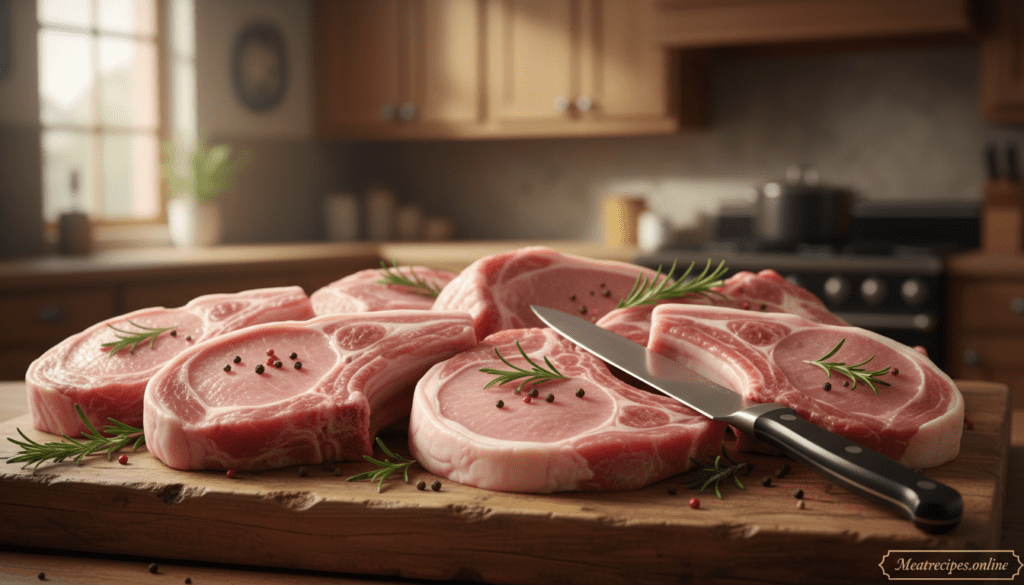
Bone-in vs. Boneless
Bone-in pork chops often stay slightly juicier and give richer flavor because the bone slows heat transfer. Boneless pieces cook faster and are easy to brine or butterfly if you prefer a quick, thin cut.
The Importance of Thickness
For best results, make sure your chops are at least 1 inch thick. That thickness helps prevent drying out and gives you time to develop a golden crust without overcooking the center.
- Season with salt, pepper, garlic, and your favorite seasoning to boost fat and flavor.
- Use a high-quality oil, like avocado oil, to get an even crust in the skillet.
- If you have a thin cut, lower the heat and watch the time so the center reaches proper temperature without burning the outside.
Essential Tools for Stovetop Success
Start with the right cookware and the rest of the cook becomes simple.
A 12-inch pan gives you breathing room. Use a large skillet so your pork chops can sear without crowding. Overcrowding lowers the surface temperature and causes steaming instead of browning.
Choose heavy materials: cast iron, carbon steel, or a thick anodized non-stick. These options conduct and hold heat so you can get an even, golden crust in minutes.
Let the pan heat for several minutes before adding oil or meat. A hot surface ensures immediate contact sear and better flavor development.
- Use a sturdy 12-inch pan to avoid overlap.
- Pick cast iron or heavy-duty iron for top heat retention.
- Never crowd the pan; cook in batches if needed.
- Good tools make any pork recipe easier and more consistent.
Preparing Your Meat for Maximum Flavor
Prep transforms good meat into great meat. Small steps before cooking make a big difference in texture and taste.
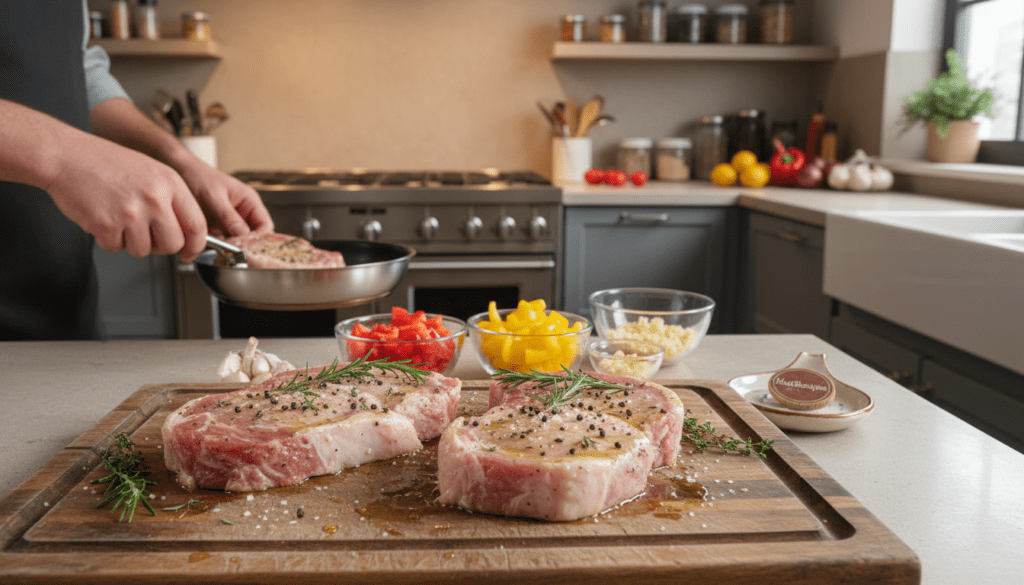
The Role of Buttermilk
Soaking bone-in pork chops in buttermilk tenderizes by breaking down proteins. Marinate for at least 30 minutes for a subtle tang and softer texture.
Seasoning Secrets
Pat the meat dry with paper towels before you season. That makes a better crust when you sear.
- Generously season all sides with salt, pepper, and garlic to boost flavor.
- Mix a few tablespoons of flour with your seasoning to help form a golden, crusty exterior.
- Use a touch of oil or butter so the surface browns evenly when it hits the hot pan.
Bringing to Room Temperature
Take your chops out of the fridge and let them rest for 30 minutes. This evens cooking so the center reaches the right temperature without overcooking the outside.
Tip: Make sure the pieces are at least one inch thick when possible. Proper prep is one of the most important tips to get juicy results and a beautiful, golden fat layer when you sear.
Mastering the Sear and Steam Technique
Heat control is the secret: high heat to brown, then low heat to finish without drying out.
Start by heating your pan over medium-high heat until it shimmers. Add a little oil, then lay the pork chops in the hot surface.
Sear for 3–5 minutes per side without moving them. This gives a golden crust and deep flavor.
After flipping, lower the heat to low and cover the pan to steam the meat. Cook until the internal temperature reaches 145°F.
- Heat the pan until it’s very hot before adding meat.
- Sear 3–5 minutes per side to form a crust.
- Reduce to low, cover, and steam to 145°F.
- Let the pieces rest for at least 5 minutes before serving.
Use a meat thermometer so you don’t overcook. When you follow this method, the result is moist, flavorful pork with a perfect crust and easy prep for any side.
For a broader look at hitting the right doneness on the stovetop or in the oven, see our guide to how to cook moist pork chops.
Creating a Simple Pan Sauce
A bright, glossy pan sauce turns the fond left in the pan into the star of your plate. After you remove your pork chops from the large skillet, keep the heat at medium-high heat and pour off any excess fat.
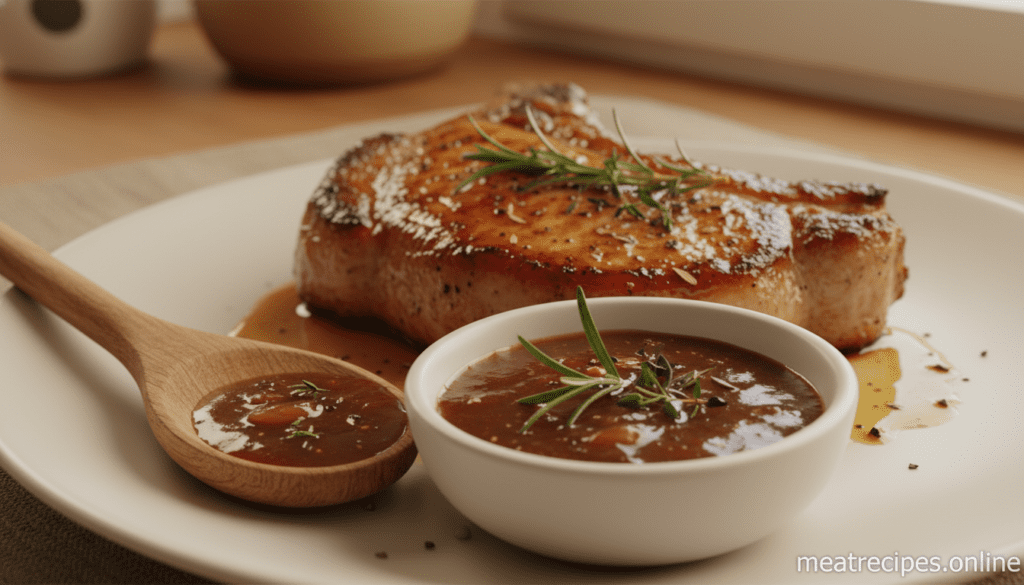
Deglaze the pan with about 1/2 cup chicken stock, a splash of apple cider vinegar, and a teaspoon or two of honey. Stir and scrape the browned bits so they dissolve into a savory mixture.
Finish with butter: swirl in one tablespoon of butter at the end to make the sauce glossy and smooth. This coats the meat and adds richness to the crust.
Flavor Variations
You can add minced garlic, fresh thyme, or a splash of white wine to change the flavor profile.
- Use a cast iron or heavy iron pan for the best fond.
- Serve the sauce spooned over pork chops and mashed potatoes for a comforting side.
- Season to taste with salt and pepper before plating.
Recommended Side Dishes to Complete Your Meal
Thoughtful side dishes echo the flavors in your pan and add texture to every bite.
Creamy mashed potatoes are a classic side that soaks up the pan sauce and adds comforting richness.
For a lighter plate, roast asparagus until tender and slightly charred. A crisp coleslaw brings bright crunch and contrast.
Sautéed zucchini is quick and healthy. Lemon garlic cabbage adds a citrusy lift that pairs well with buttered meat.
- A classic dinner of pork chops with mashed potatoes balances richness and texture.
- Roasted asparagus or a colorful coleslaw keeps the meal fresh and light.
- Sautéed zucchini and lemon garlic cabbage offer healthy, flavorful vegetable options.
You can prepare most sides while the pork rests for 5 minutes, so everything finishes at the same time.
Choosing the right sides turns a simple pork chop recipe into a complete, satisfying dinner for your family or guests.
Proper Storage and Reheating Methods
Proper cooling and sealing are the simplest steps to keep your cooked pork tasting fresh. After you finish cooking, let the meat rest for a few minutes, then transfer it to an airtight container. This keeps juices in and helps flavors stay bright.
Refrigerate cooked chops within two hours. Stored in an airtight container, they will stay good in the refrigerator for 3 to 4 days. If you want more time, freeze the pieces in a freezer-safe bag for 2 to 3 months.
When it’s time to reheat, use low heat. Rewarm in the oven at 325°F with a splash of chicken broth to keep the meat moist. Alternatively, warm gently in a pan with a little butter or oil, cover to trap steam, and check temperature often.
- Store leftovers in an airtight container for 3–4 days in the fridge.
- Freeze for up to 3 months in a freezer-safe bag.
- Reheat at low heat (325°F) with a splash of broth or in a covered pan with butter.
- Always let the meat rest a few minutes after reheating so juices redistribute.
Tip: Make sure to warm slowly so the center reaches a safe temperature without drying the surface. These small steps keep your plate tasting like the first night and make leftovers an easy side for busy weeknights.
Use a simple spice rub or a quick pan sauce to enhance flavor. For a deeper taste, you can also explore this homemade taco meat seasoning guide, or browse our full best pork recipes collection for more ideas.
Conclusion
Practice the basics—seasoning, searing, and resting—and you’ll nail texture and taste on each try.
Focus on thickness and use a meat thermometer. That helps you finish the center in just a few minutes and avoid overcooking. Let the meat rest to keep juices locked in.
Use a simple spice rub or a quick pan sauce to lift flavor. These small steps make a big difference when you cook pork at home.
Follow this approach and you’ll feel confident the next time you prepare a chop for family dinner.
Use a simple spice rub or a quick pan sauce to enhance flavor. These small techniques can elevate your cooking. Serious Eats shares in-depth tips and methods.
FAQ
How long should you sear an inch-thick bone-in cut in a cast iron pan?
What’s the best cooking fat to use when you heat a pan?
Should you brine or marinate before cooking?
How do thickness and bone-in vs. boneless affect cook time?
What’s the simplest pan sauce to make after cooking?
How do you check doneness without a thermometer?
What sides pair well with a skillet-seared cut?
Can you finish thicker cuts in the oven?
How should you store and reheat leftovers?
Any quick seasoning tips for weeknight meals?
⭐ Love This Recipe? Tell Us What You Think!
There are no reviews yet. Be the first one to write one.