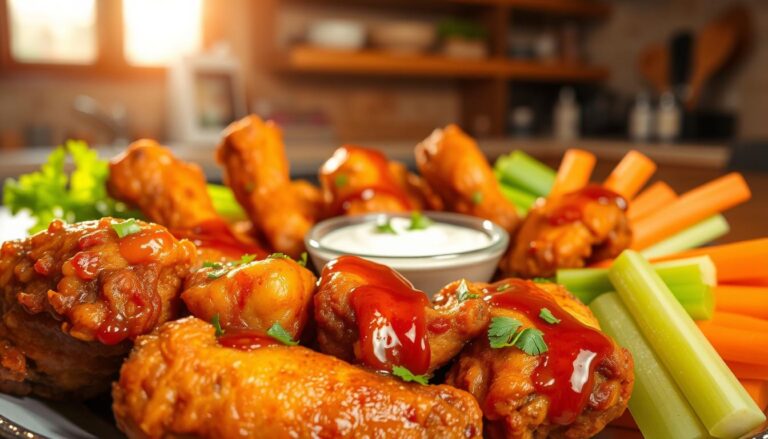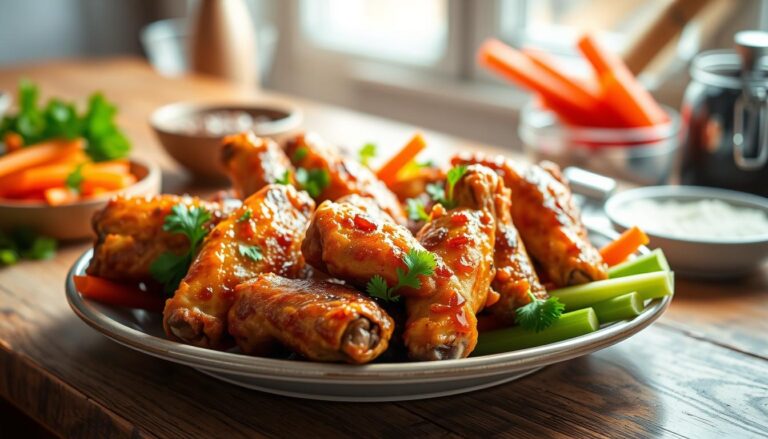
How Long to Fry Chicken Wings (Perfect Crispy Time Guide)
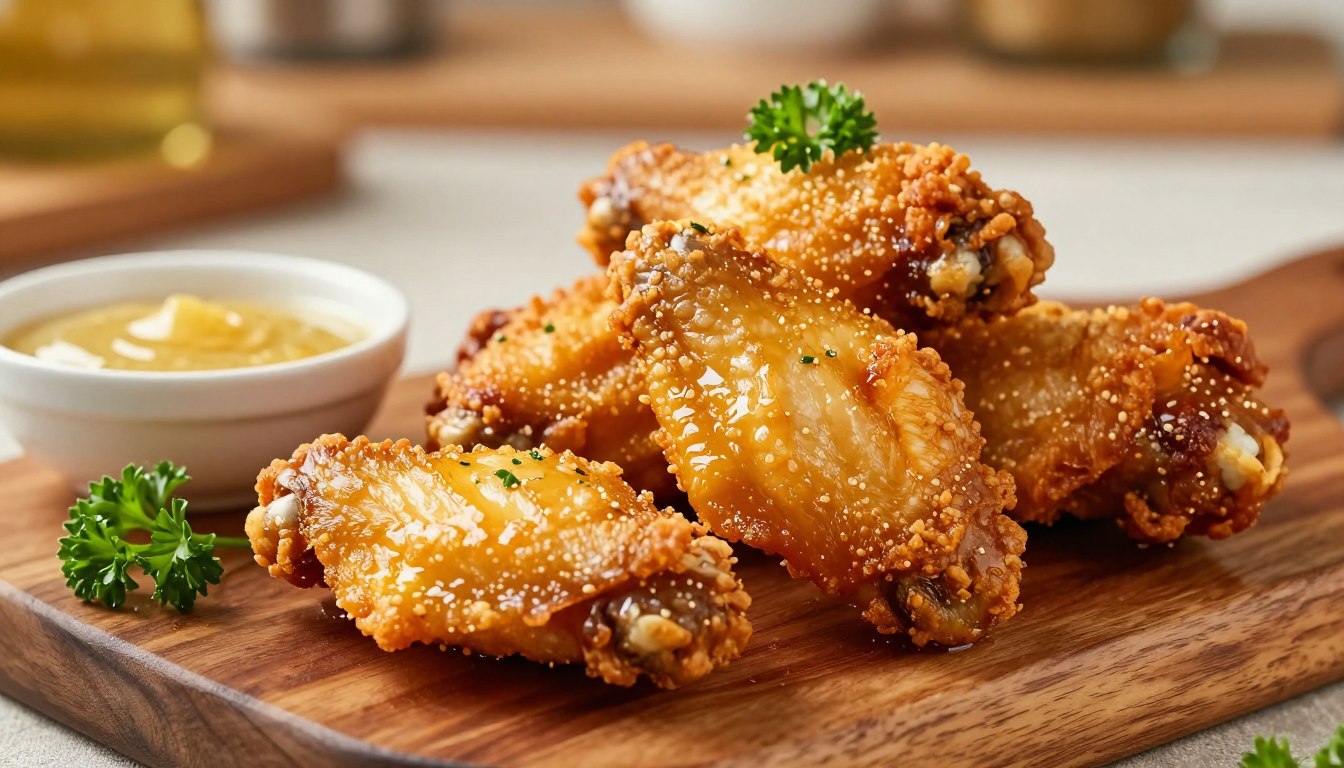
Curious how long chicken wings should fry to get that perfect crisp while staying juicy inside? You’ll get a quick, clear answer right now: deep-fry at 350°F for 12–15 minutes or at 375°F for 9–12 minutes, checking internal temp for safety.
These times aim for a safe minimum of 165°F inside,For official food safety recommendations about chicken cooking temperatures, the USDA provides detailed guidance on safe poultry preparation.
Though many cooks prefer pulling at 185°F–190°F for extra tenderness. Use a reliable thermometer and avoid crowding the pot; adding too many pieces cools the oil and lengthens cook time.
This guide focuses on deep-frying in a pot or fryer and gives you a simple timetable, crispiness tips, doneness checks, fresh versus frozen notes, and a short step-by-step checklist so you can get crisp skin and juicy meat every time.
Key Takeaways
- 350°F: 12–15 minutes; 375°F: 9–12 minutes for average pieces.
- Check internal temp: minimum 165°F; 185°F–190°F yields more tender meat.
- Avoid crowding; maintain oil temp for consistent results.
- Fresh and thawed pieces cook more evenly than frozen.
- Look for golden brown skin, active bubbling, and floating as visual cues.
Table of Contents
How long to fry wings at 350°F vs 375°F
Start with steady heat and size-matched pieces. Set a clear time target, then watch the oil and the meat. Small changes in load or size shift minutes quickly.
| Oil temperature | Minutes per batch | Notes |
|---|---|---|
| 350°F | ≈ 10 minutes | Gentler browning; suits thicker pieces |
| 375°F | ≈ 8 minutes (8–10) | Faster crisping; monitor for over-browning |
Thermometer override: minutes get you close, but confirm doneness at 165°F minimum. Many cooks pull at 185°F–190°F for more tender results.
At 350°F the heat transfers slower, so skin renders and browns more gradually. If oil sags you risk oil absorption and greasy skin.
At 375°F the skin crisps quicker because browning happens faster. Avoid pushing oil above 400°F; that browns outside before the inside is done.
Sort wings by size; larger pieces add ~1 minute or more. Avoid crowding: too many pieces drop oil and add minutes. For beginners, preheat oil about 20–25°F above target so the oil lands near your set temperature after you add a 2 lb batch. If oil can’t recover, cut batch size or raise heat slightly within safe limits.
The ideal oil temperature range for crispy fried chicken wings
Keeping your oil steady between 350°F and 375°F gives you crisp skin without overcooking the meat.
Why 350°F–375°F is the sweet spot
This range is hot enough to seal and blister the skin quickly while allowing the interior to reach safe doneness. The right heat limits oil absorption so pieces stay crunchy, not greasy.
Temperatures to avoid for best texture
- If oil sits at 275°F–325°F, bubbling is weak and cook time stretches. That makes fried chicken taste greasy because it soaks up oil.
- Above 400°F, the exterior browns fast and can burn before the center is cooked through. Rapid color is not the same as doneness.
- If oil reaches its smoke point you’ll get off flavors and a harsh kitchen odor. Smoking oil is a clear warning you’re outside the safe frying zone.
Use a clip-on probe or a fryer control to hold steady temperature. Stable heat is the difference between blistered, crunchy skin and soggy results when you deep fry.
Deep-frying chicken wings step-by-step (quick method)
Set up your station first so safety and steady heat make the rest simple.
Preheat oil and set up a safe frying station
Choose a sturdy pot or a reliable home fryer and fill to the safe line. Clip a thermometer to the side and heat oil until it reaches 350°F–375°F.
Arrange long tongs or a spider, a sheet pan, paper towels, and a wire rack near the pot. Clear the area so kids and pets stay well away.
Fry in batches until golden brown
Lower each wing gently; don’t dump pieces in. Fry in small batches so the oil recovers between sets.
- At 375°F fry about 8 minutes. At 350°F expect ≈ 10 minutes.
- Watch for a deep golden brown and lively bubbling as moisture exits the skin.
- Confirm doneness with an internal thermometer before removing.
Drain on a wire rack or paper towels, then sauce
Let pieces rest on a wire rack for the best crisp underside. Paper towels work, but they can soften the bottom if wings sit too long.
Toss with sauce only after draining. Quick tossing preserves the crust and keeps the final bite crisp and saucy.
| Step | Tool | Key tip |
|---|---|---|
| Preheat | Pot or fryer, thermometer | Heat oil to 350°F–375°F before adding chicken |
| Batch fry | Spider or tongs | Keep batches small so oil temperature recovers |
| Drain & hold | Wire rack, sheet pan, paper towels | Keep warm in 250°F oven if needed; sauce after draining |
Choosing the best oil, pot, and fryer setup for wings
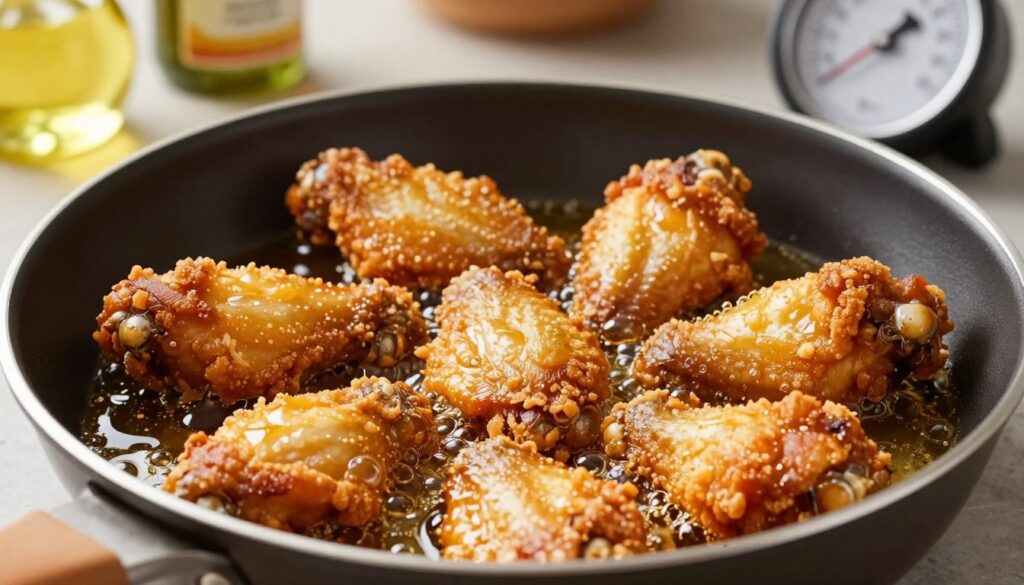
Choose neutral, high–smoke-point oil and a heat‑stable pot for consistent results. The right combo keeps oil heat steady and protects your crust from oil absorption.
Best oils for frying
Pick oils with high smoke points and a clean taste. Vegetable oil and peanut oil sit around ~450°F, while sunflower can handle up to ~500°F.
These are reliable for wings oil: vegetable oil, peanut oil, sunflower oil. They won’t overpower the chicken and give stable frying performance.
Comparing fryer, Dutch oven, and cast iron
A countertop fryer gives the most control and steady temps. A Dutch oven holds heat well and is forgiving. A cast iron pot holds heat best and rebounds fastest when you add cold pieces.
Managing temperature drop
Preheat oil about 20–25°F above your target so adding a batch lands you near 350°F–375°F. Let the oil recover between batches and use smaller batches if your stove struggles.
- Tip: More oil volume = less temperature swing.
- Outcome: Better heat retention equals less greasy skin and more consistent crunch for repeatable chicken wing recipes and other recipes.
Prep for extra-crispy wings (before they hit the oil)
Drying and a brief salt cure make the biggest texture gains. Start by patting each wing very dry with paper towels. Less surface moisture means less splatter and faster crisp when the chicken hits hot oil.
Dry‑brine: Toss pieces with salt, place single layer on a wire rack, and refrigerate for at least 1 hour or overnight. This firms the skin and boosts flavor without adding any wet marinade.
Properly dried skin should feel slightly tacky, not wet. Wet skin soaks oil and causes popping that harms crispness.
If pieces still feel damp, apply a light dusting of a fine powder like cornstarch or baking powder. Use a small amount; heavy flour coating changes the frying style and browning rate.
Simple seasoning ideas
- Base: salt + pepper.
- Add: garlic powder and onion powder for classic flavor.
- When to season: before frying for interior flavor; add sauce or dry rub after draining for max crisp.
| Prep step | Why it helps | Quick tip |
|---|---|---|
| Pat dry with paper towels | Reduces surface water and splatter | Work in small batches for speed |
| Dry‑brine with salt | Improves texture and internal flavor | 1 hour minimum; overnight best |
| Light dusting (powder) | Boosts crunch on damp skin | Use cornstarch or baking powder; avoid heavy flour |
Fresh vs frozen wings for frying
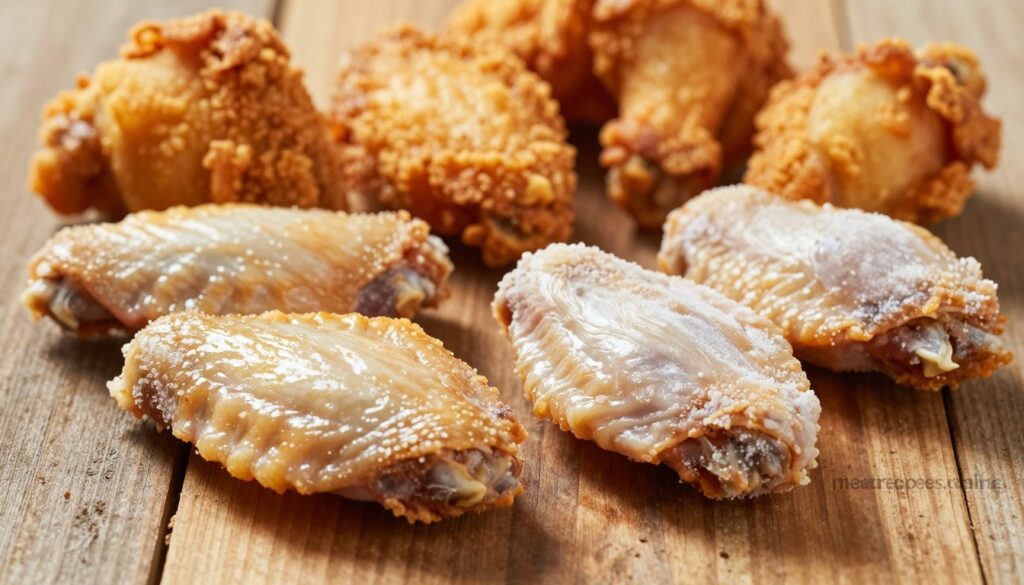
Start with thawed pieces for safer, more consistent results. Fresh wings give predictable texture and even cooking. Frozen pieces often carry surface ice and extra water that causes violent splatter when they meet hot oil. That splatter can burn you and make a dangerous mess.
Why frozen is risky
Safety: Ice meeting hot oil produces steam and aggressive splashing. Those bursts can send hot oil far from the pot.
Texture: Excess water cools the oil and prevents crisping, so the skin often turns soggy and the meat cooks unevenly.
Best thawing and drying method
Thaw wings in the refrigerator until fully defrosted. This may take overnight, so plan ahead.
- Drain any pooled liquid.
- Pat each piece thoroughly with paper towels.
- Check that pieces feel dry to the touch before you deep fry.
Final check: Dry skin means steady oil temperature, even cooking, and crisp skin on schedule. Proper prep saves time and protects your hands while you cook at home.
How to tell when fried chicken wings are done
Doneness is both visual and measurable. Use a probe or an instant-read thermometer as your primary check, then confirm with color and bubbling.
Minimum safe internal temperature
Insert the thermometer into the thickest part of the drumette, avoiding bone contact. A chicken wing is safe at 165°F internal temperature. Check near the end of the expected minutes per batch so you don’t overcook.
Optional tenderness target
If you prefer more tender meat, pull pieces closer to 185°F–190°F. That yields juicier, fall‑off‑the‑bone texture but may darken the exterior, so watch browning as you approach that range.
Visual cues you can trust
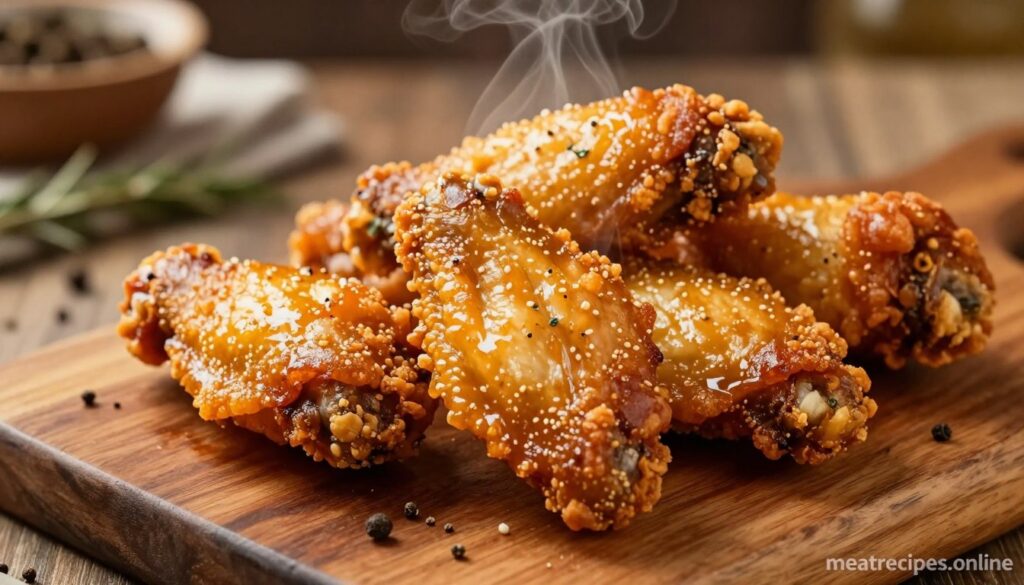
- Skin is deep golden brown and crisp.
- Bubbling around the surface calms as moisture exits.
- Pieces often begin to float when done.
Quick troubleshooting
If wings brown fast but the thermometer reads low, your oil is too hot. If they look pale and greasy, the oil is too cool. Adjust temperature and check again with your thermometer before serving.
| Signal | Meaning | Action |
|---|---|---|
| 165°F | Safe minimum | Remove or hold for resting |
| 185°F–190°F | Extra tender | Monitor browning closely |
| Golden brown + float | Likely done | Confirm with thermometer |
Common frying mistakes that make wings greasy, soggy, or burnt
Small errors in oil management cause the biggest problems with fried chicken. You can fix most issues by watching load size, temperature, and oil quality. Follow simple steps and the results improve fast.
Overcrowding the pot and dropping the oil temperature
Adding too many pieces at once pulls heat from the oil. That lower temp makes the skin soak up oil, leaving greasy results.
Fry in small batches so the pot or fryer can recover. Let the oil return to target before adding the next round.
Frying at too low a temperature (oil absorption)
Temperatures around 275°F–325°F lead to long cook times and soggy crust. Keep your set point in the recommended range, not below it.
Frying at 400°F+ and browning before the inside is cooked
At 400°F and above the exterior can brown fast while the center stays underdone. If you see rapid color change, reduce the heat and check internal temp.
Using smoky or dirty oil
Oil past its smoke point or full of burnt bits gives off bitter flavors and dark color. Start with clean oil and skim debris between batches.
Skipping rest/drain time (and keeping warm)
Drain on a wire rack so steam can escape. Skipping this step traps moisture and softens the crust.
For parties, hold finished pieces on a rack over a sheet pan in a 250°F oven. This keeps them warm and crisp while you finish the rest.
| Common mistake | What you see | Why it happens | Simple fix |
|---|---|---|---|
| Overcrowding | Greasy, pale skin | Oil temp drops in the pot | Fry smaller batches; allow recovery |
| Too low temp | Soggy crust, long cook | Oil absorption at 275°–325°F | Raise and hold temperature; use thermometer |
| Too high temp | Dark outside, raw inside | Surface browns faster than interior cooks | Lower heat below 400°F and test internal temp |
| Dirty or smoky oil | Bitter, dark flavor | Burnt bits or exceeded smoke point | Replace oil, skim debris, use high smoke point oil |
Flavor finishing: sauces, dry rubs, and serving tips
Finish each batch with bright sauces or a dry rub to dial in flavor without killing the crust.
When to season: Light salt before cooking seasons the meat through. Heavy wet coatings belong after frying to protect crisp skin.
Easy sauce ideas
- Buffalo: mix 1/3 cup hot wing sauce with 1 tablespoon melted butter for about 2 pounds. Scale by batch size.
- Garlic butter: melt butter, stir in minced garlic and a pinch of pepper; warm briefly so it coats evenly.
- Sweet‑spicy: whisk honey, a splash of soy, chili flakes, and a teaspoon vinegar for balance.
Tossing without sogginess
Drain on a rack, then place hot pieces in a large bowl. Add warm sauce and toss quickly just to coat. Serve immediately.
Dry rubs and serving
For max crunch, use post‑fry dry seasoning of salt, pepper, and garlic powder. Or split the batch and finish half with sauce and half with dry rub for varied wing recipes at a party.
| Finish | Best for | Quick tip |
|---|---|---|
| Wet sauce | Bold flavor | Toss briefly; serve right away |
| Dry rub | Peak crunch | Season after draining |
| On side | Keep crisp | Offer small dipping cups |
Conclusion
Stick to a clear heat-and-time plan and your chicken will finish golden and safe without guesswork. Aim for about 10 minutes at 350°F or roughly 8 minutes at 375°F, then confirm doneness with a thermometer.
Keep oil steady in the 350°F–375°F range, avoid crowding, and let it recover between batches. Pull at 165°F for safety or push toward 185°F–190°F for extra tender meat.
Quick troubleshooting: greasy = oil too cool or crowded; burnt outside = oil too hot; soggy after saucing = not drained well.
FAQ — Do pieces float when done? Often yes, but always verify temperature. Can you use frozen pieces? No — thaw and dry first. Want a light coating? A small dusting helps; heavy flour alters cook time.
Next step: pick your oil, set your temperature, time a trial batch, and rely on your thermometer for repeatable results.