Korean Beef Rice Bowl: Easy Recipe + Flavor Variations
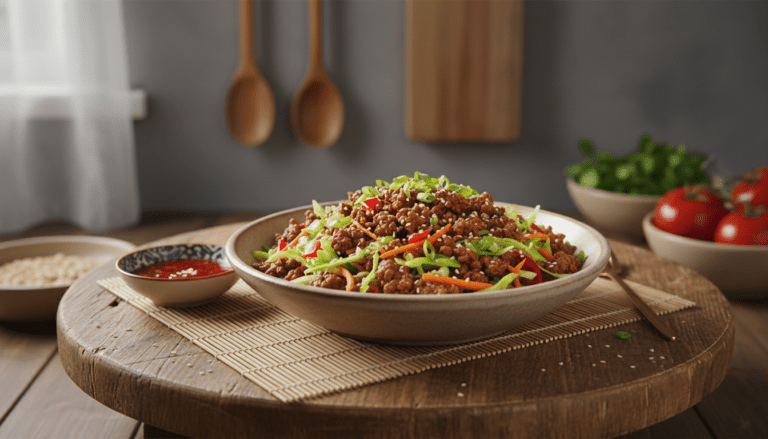
korean ground beef bowl — craving bold, bulgogi-inspired flavor on a weeknight without the fuss?
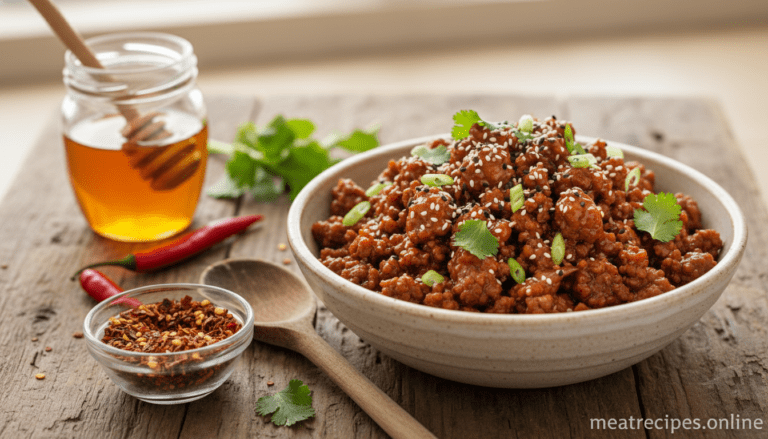
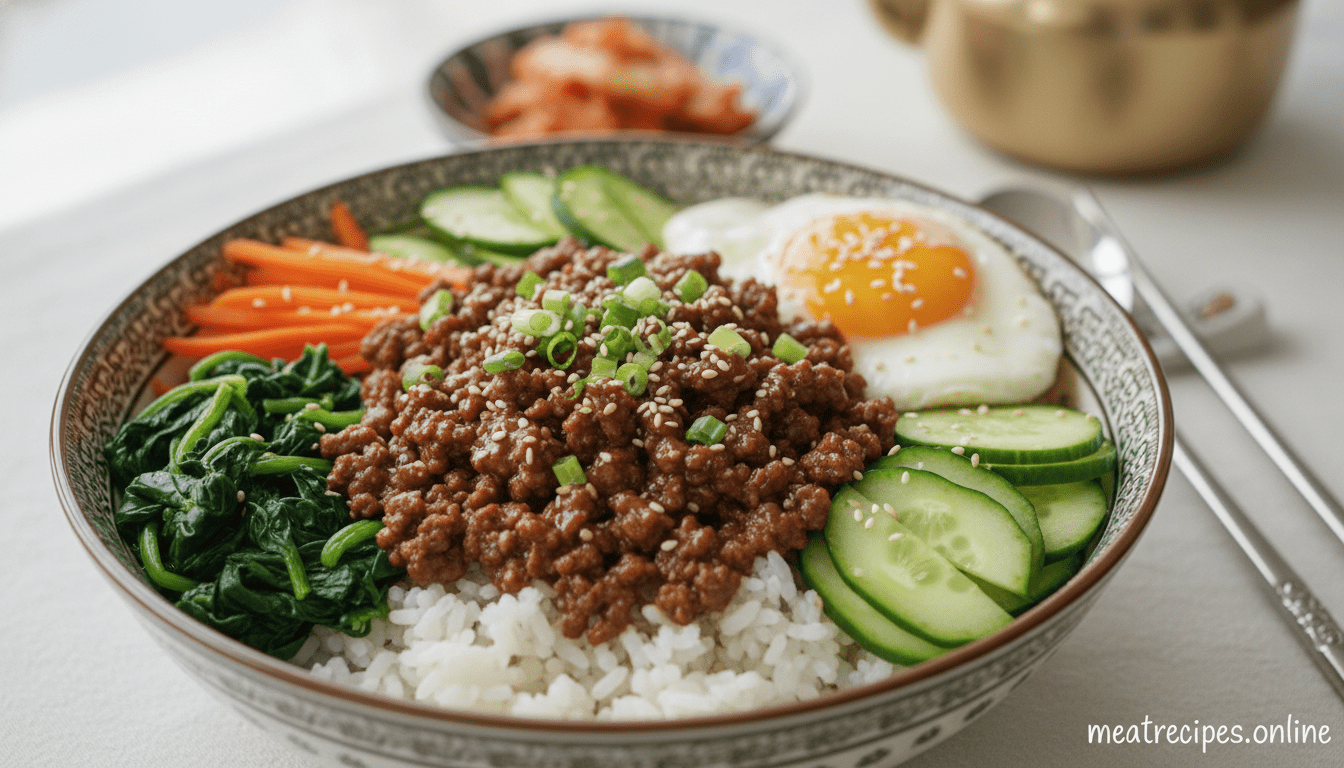
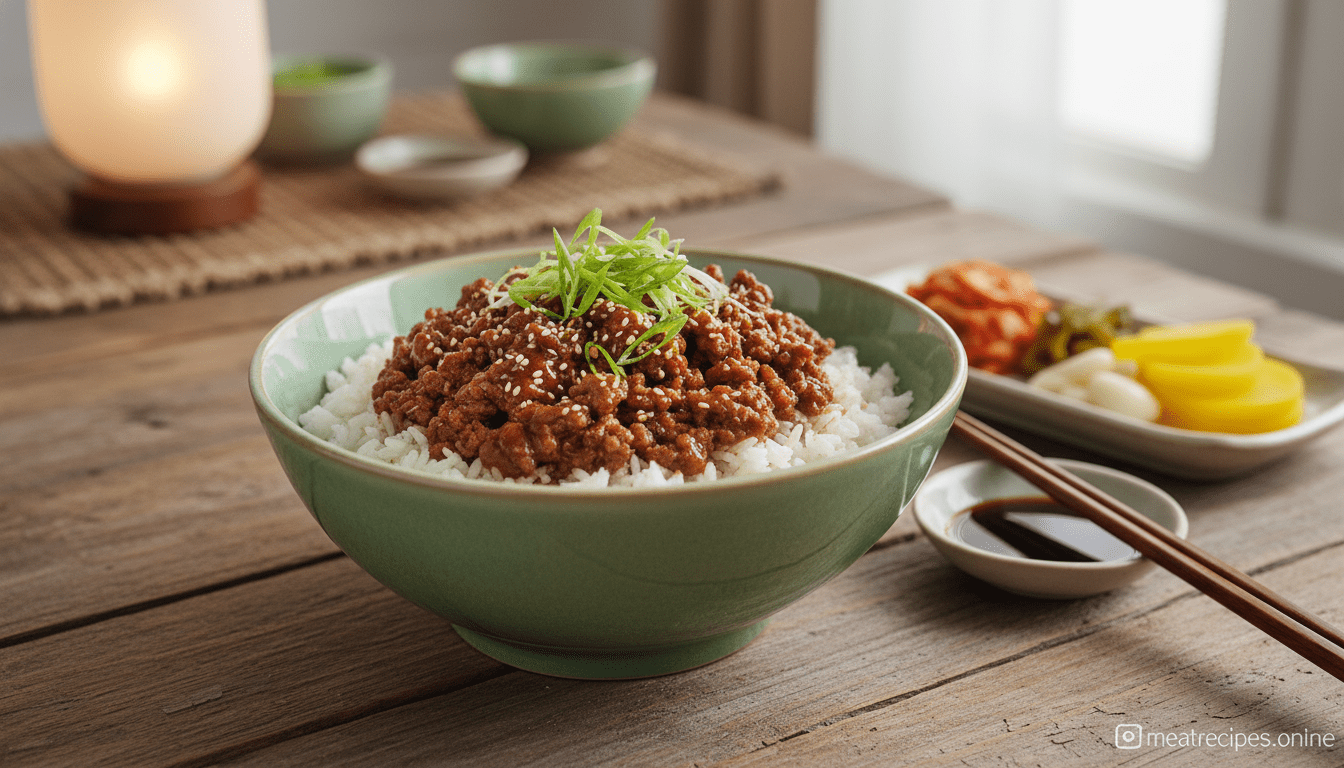
This korean ground beef bowl brings classic Korean beef rice bowl taste in just 20–30 minutes. It uses ground beef for bulgogi-style flavors, skipping the long marinades. You’ll add grated apple and onion for a balanced taste.
The dish is quick and affordable to make. It serves 4 people, with prep and cook times of 10–15 minutes each. You can use white rice, jasmine, brown rice, farro, cauliflower rice, or noodles as the base.
This high protein beef bowl is perfect for meal prep. It reheats well, keeping 3–4 days in the fridge or up to 3 months frozen. Each serving has about 540–650 kcal, ~27 g protein, and around 800–1,000 mg sodium, depending on your sauce and toppings.
Table of Contents
Korean Beef Rice Bowl
Ingredients
Equipment
Method
- Grate the onion and apple, then mince the garlic and ginger.
- Cook the rice according to package directions.
- Prepare any vegetables and garnishes you want to serve with the bowls.
- Mix the grated onion, apple, garlic, ginger, soy sauce, brown sugar, and sesame oil to make the sauce.
- Heat the neutral oil in a large skillet over medium-high heat.
- Add the ground beef and break it apart with a spatula.
- Cook the beef for 5–7 minutes until no longer pink and beginning to brown, then confirm it has reached 160°F (71°C) with an instant-read thermometer.
- Drain excess grease if needed.
- Pour the prepared sauce over the beef and reduce the heat to medium-low.
- Simmer for 3–6 minutes until the sauce thickens and coats the beef.
- Remove from the heat and finish with a little sesame oil and sesame seeds.
- Divide the cooked rice among bowls.
- Spoon the Korean-style ground beef over the rice.
- Add vegetables, scallions, sesame seeds, kimchi, or gochujang as desired and serve.
Notes
Cook Time (full range): 10–15 minutes.
Total Time (full range): 20–30 minutes.
The recipe serves about 4 people.
Store leftovers in the refrigerator for 3–4 days.
The cooked beef can be frozen for up to 3 months.
Key Takeaways
- Ready in roughly 25–30 minutes—great for busy weeknights.
- Bulgogi-inspired flavor without long marinades using ground beef.
- Serves about 4; works with rice, farro, cauliflower rice, or noodles.
- Meal-prep friendly: refrigerate 3–4 days or freeze up to 3 months.
- Approximate nutrition: 540–650 kcal and ~27 g protein per serving.
What is a Korean Ground Beef Bowl?
This dish is a quick, weeknight-friendly version of traditional bulgogi. It uses ground beef to get those bold flavors in minutes. It’s a great way to enjoy Korean BBQ at home.
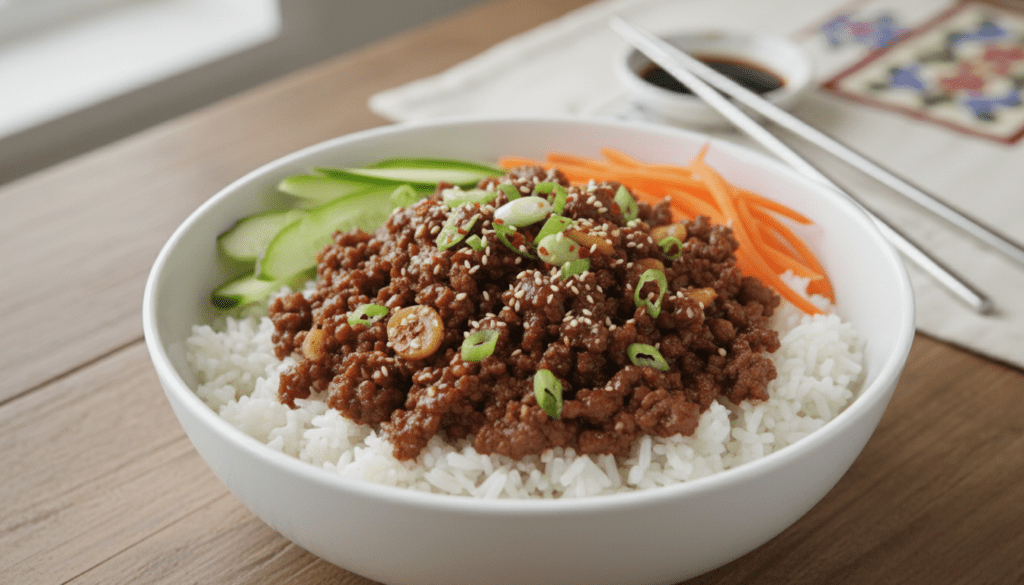
The Inspiration Behind the Dish
Traditional bulgogi uses thinly sliced beef marinated in soy, sesame oil, and spices. This mix creates deep umami and sweetness. The korean beef bowl uses ground beef to achieve the same flavors without a grill.
The cooking method is fast caramelization and a drizzle of toasted sesame oil. You can add gochujang for heat or mirin for extra depth to the dish.
Key Ingredients Explained
Ground beef is used instead of sliced cuts for quick cooking. Choose lean 90/10–95/5 to cut grease, or use 80/20 and drain excess fat. Leaner blends make the bowl lighter, while fattier beef adds richness.
Aromatics like garlic and ginger are the base. Grated onion adds moisture and savory notes. Grated red apple or Asian pear adds sweetness and tenderizes the meat.
Sauces and seasonings shape the final flavor. Soy sauce or tamari provide salt and umami. Toasted sesame oil is added at the end for aroma. You can sweeten with brown sugar, honey, maple, or agave. Mirin adds complexity, and gochujang or gochugaru make it spicy.
| Component | Purpose | Suggested Options |
|---|---|---|
| Ground beef | Protein base; quick browning to mimic bulgogi texture | 90/10–95/5 lean, 80/20 for richness |
| Garlic & ginger | Primary aromatics; build savory backbone | Fresh minced garlic, grated ginger |
| Grated onion | Moisture and savory depth; aids caramelization | Yellow onion or sweet onion |
| Grated fruit | Natural sweetener and tenderizer | Red apple, Fuji, or Asian pear |
| Soy sauce / Tamari | Salt and umami | Kikkoman, San-J tamari |
| Sweetener | Caramelized glaze | Brown sugar, honey, maple, agave |
| Sesame oil | Finish for nutty aroma | Toasted sesame oil |
| Spicy elements | Optional heat and color | Gochujang paste, gochugaru flakes |
| Garnishes | Texture and brightness | Sesame seeds, green onions, kimchi, cucumber |
Essential Ingredients for a Korean Ground Beef Bowl
Start by gathering ingredients that balance texture, aroma, and umami. Your choices here shape whether you end up with a simple ground beef rice bowl or a bold korean beef rice bowl with complex layers. Keep portions and pantry staples ready so cooking stays fast and precise.
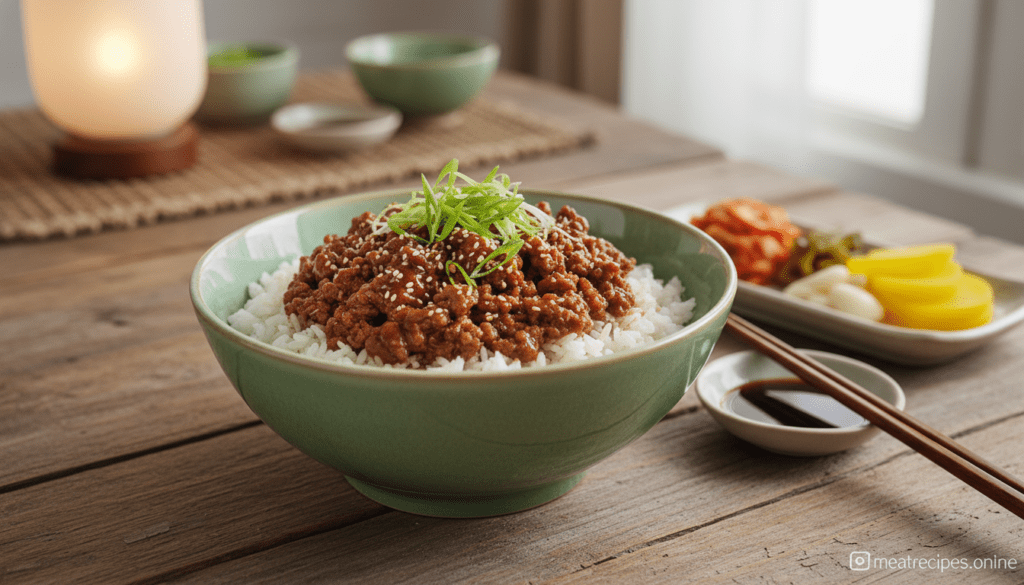
Ground beef: Choosing the right cut
Pick lean ground beef in the 90/10–95/5 range for a cleaner finish and lower grease. Plan about 1 lb (450–500 g) to feed four people. If you use 80/20, brown the meat and drain excess fat to avoid a soggy bowl.
Typical servings from this amount yield roughly 25–27 g protein per person, which makes this a reliable high protein beef bowl option for weeknight meals.
Aromatic vegetables to include
Use a grated onion for flavor dispersion and a microplaned apple or Asian pear to add gentle sweetness and tenderizing enzymes. Grated garlic—three to four cloves—spreads through the meat better than chunks.
Grate about 1 teaspoon of fresh ginger or use paste for a citrusy lift. Slice scallions and cook the white parts with the meat while reserving the greens for garnish. These steps help your korean beef bowl recipe taste layered and fresh.
Flavor enhancers: sauces and spices
Measure soy sauce at 2–3 tablespoons; choose all-purpose or light soy. Use tamari if you need a gluten-free korean beef rice bowl. Avoid dark soy or sweet kecap manis that will overpower the profile.
Add 1 tablespoon brown sugar or a swap like honey to encourage caramelization. Stir in 1 tablespoon sesame oil into the sauce, then finish with 1 teaspoon at the end to preserve aroma.
Adjust heat with gochujang from 1 teaspoon to 2 tablespoons, depending on whether you want a subtle kick or a gochujang beef bowl character. Keep rice vinegar, mirin, gochugaru, and a pinch of black or white pepper handy for balance.
For garnish, toast sesame seeds and crumble nori, or serve small amounts of kimchi or pickled ginger to add acidity. These elements complete a versatile ground beef rice bowl that suits busy schedules and bold appetites.
Step-by-Step Cooking Instructions
Follow these clear steps to build a bold, balanced bowl. You will prep, cook, and assemble a korean ground beef bowl. It will have bright vegetables, savory sauce, and warm rice. Read each short paragraph, then move to the next step.
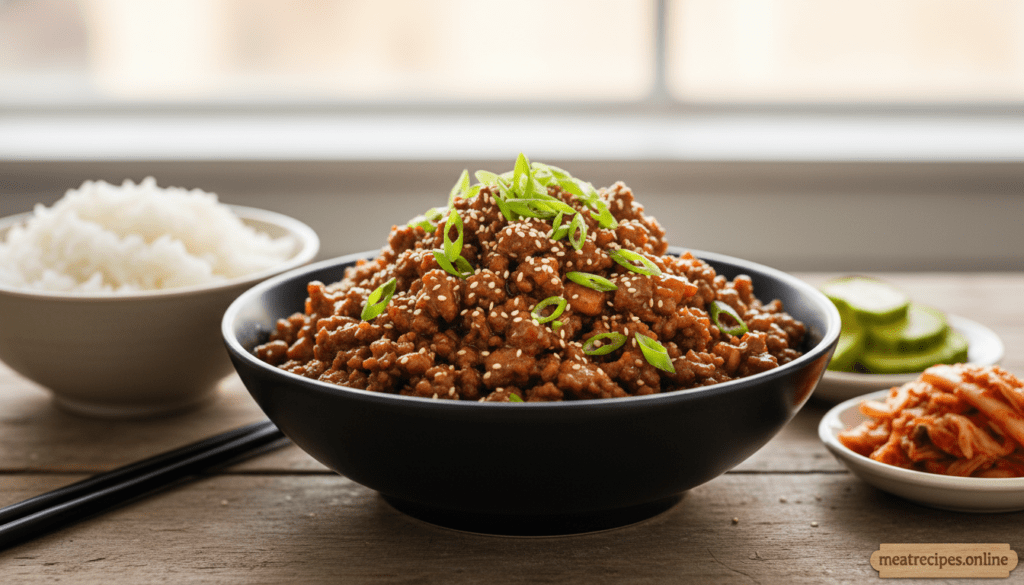
Preparing the Ingredients
Grate one onion and one apple on a microplane or the fine side of a box grater. Mince two cloves of garlic and one thumb-size piece of ginger. This mix forms the base of your bulgogi-style sauce for the korean beef bowl recipe.
Cook rice to package directions. Use short- or medium-grain for stickier texture or jasmine for a fragrant bed. Plan about one cup cooked rice per serving to match the ground beef rice bowl portions.
Wash and slice vegetables: julienne carrot, thin cucumber, shred cabbage, chop spinach, and slice scallions. Mash avocado if you want creaminess. Prepare kimchi or pickles for acidity on the side of your korean beef rice bowl.
Make two sauces: mix grated onion, apple, garlic, ginger, soy sauce, sesame oil, mirin (optional), brown sugar, and a pinch of pepper for a bulgogi-style glaze. For a gochujang variant, combine soy sauce, gochujang, sugar, garlic, ginger, and rice vinegar for a spicy-sweet finish that suits a ground beef rice bowl.
Cooking the Ground Beef
Heat one tablespoon neutral oil in a large skillet over medium-high heat. Add one pound of ground beef and break it up with a spatula. Cook for five to seven minutes until no longer pink and bits begin to brown, then confirm it has reached 160°F (71°C) with an instant-read thermometer.
If your beef is very fatty, drain excess grease. Add the white parts of the scallions and cook one to two minutes until soft. This step lifts flavor into the meat for your korean ground beef bowl.
Pour your prepared sauce over the beef and reduce the heat to medium-low. Simmer for three to six minutes until the sauce thickens and coats the meat. Stir occasionally. Briefly raise the heat at the end to get small caramelized edges for richer taste.
Remove the pan from heat and stir in a teaspoon of toasted sesame oil. Sprinkle sesame seeds to lock in the aroma. This finishing touch makes the korean beef bowl recipe smell and taste unmistakable.
Combining Flavors in the Bowl
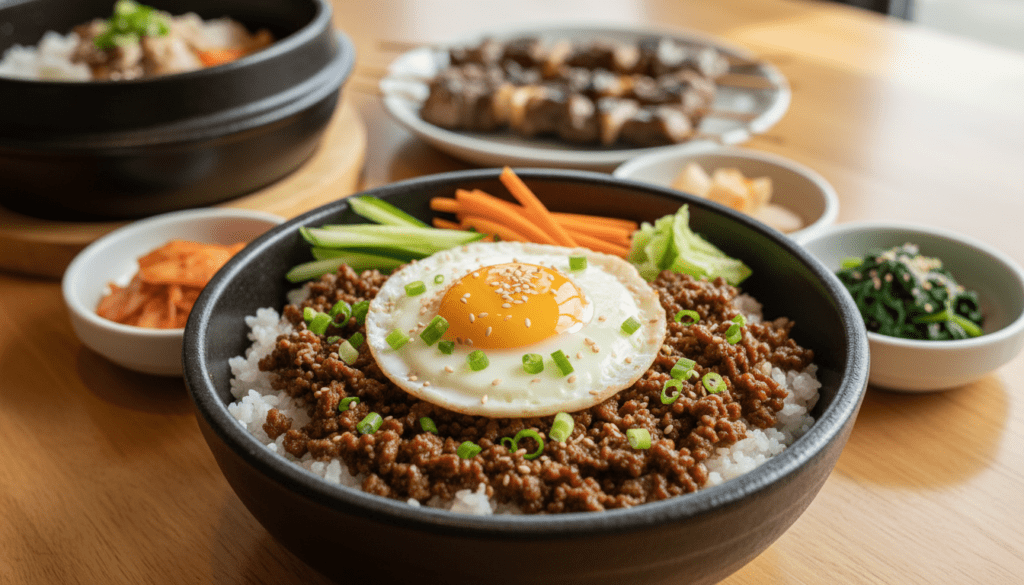
Divide the cooked rice among bowls. Spoon the sauced beef over the rice to create the core of your korean beef rice bowl. Arrange vegetables—spinach, carrots, cucumber, lettuce—and avocado in neat sections around the meat.
Add optional kimchi, pickles, or a side of steamed greens to contrast the savory beef. Drizzle an extra rice-bowl sauce of soy, sesame oil, rice vinegar, and brown sugar for brightness, or offer spicy mayo (mayo mixed with gochujang) on the side for heat.
Finish with sliced scallions, white sesame seeds, and shredded nori. Serve immediately so textures stay crisp and warm rice complements the saucy beef in your ground beef rice bowl.
| Step | Action | Timing |
|---|---|---|
| 1 | Grate onion and apple; mince garlic and ginger | 5 minutes |
| 2 | Cook rice to package directions | 15–20 minutes (varies by type) |
| 3 | Wash and prepare vegetables; mash avocado if using | 5–10 minutes |
| 4 | Brown ground beef in skillet; drain if needed | 5–7 minutes |
| 5 | Add sauce; simmer until reduced and coats beef | 3–6 minutes |
| 6 | Stir in sesame oil; finish with sesame seeds | 1 minute |
| 7 | Assemble bowls: rice, beef, vegetables, garnishes | 2–4 minutes |
Tips for Perfecting Your Korean Ground Beef Bowl
Small changes can make a big difference in your korean ground beef bowl. Focus on texture, spice balance, and fresh toppings. This will turn a simple dish into a high protein beef bowl perfect for weeknights.
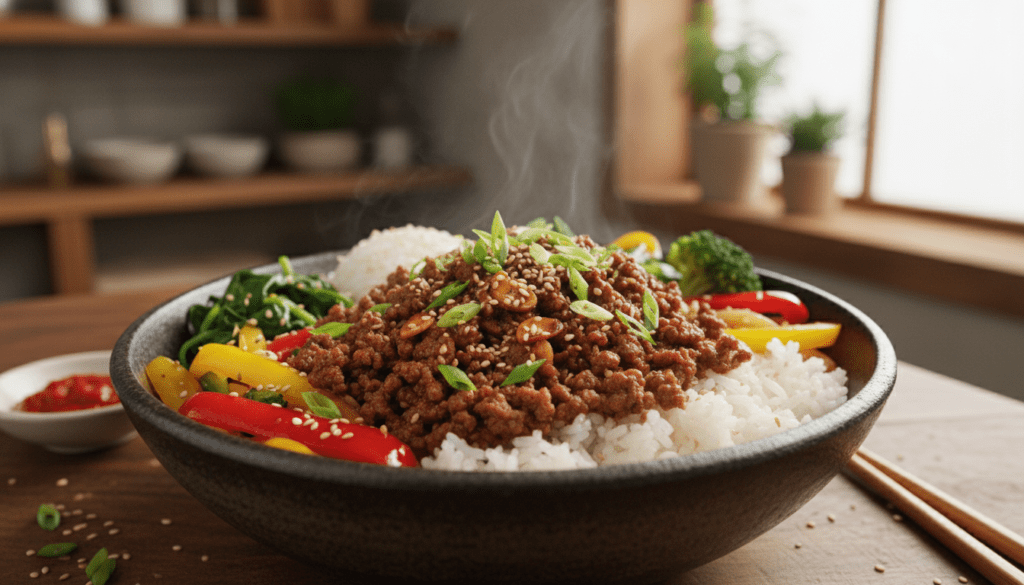
Achieving the Right Texture
Start by cooking the beef on high heat to brown it quickly. This creates crispy, caramelized bits that add flavor. Then, lower the heat and simmer briefly to keep the meat moist.
Grate an apple and a white onion finely to blend into the sauce. This creates a smooth texture without chunky bits. If the sauce gets too thick, add a bit of water to keep the meat juicy.
Adjusting Spice Levels
Before adding the sauce to the pan, taste it. For a mild dish, skip gochujang and gochugaru. Use soy sauce, sesame oil, and a bit of brown sugar instead.
For a moderate heat, add 1–2 teaspoons of gochujang or 1 teaspoon gochugaru. For spicier dishes, add more gochujang and gochugaru. Balance the heat with extra sugar or honey. If using low-sodium soy sauce, add a pinch of salt to balance the flavors.
Adding Fresh Vegetables for Crunch
Add fresh textures to your dish. Use julienned carrots, thin cucumber slices, shredded cabbage, or quick-pickled cucumbers. These add crunch and brightness to your korean ground beef bowl.
For warm greens, wilt spinach or quick-sauté bok choy in 1–2 teaspoons of oil over high heat for 30–60 seconds. Top your bowls with creamy avocado or bean sprouts for a balanced mouthfeel.
Variations of the Classic Recipe
Try simple swaps to make this korean beef bowl recipe fit any diet or taste. You can change the protein or grains without losing flavor. These ideas keep the dish quick and savory, or add a new twist.
Vegetarian and Vegan Adaptations
For a vegan version, use firm tofu, tempeh, or plant-based ground beef. Press the tofu to remove moisture and brown it longer for a crispy texture. Replace honey or brown sugar with maple syrup or agave to keep it vegan.
Make sure your gochujang is vegan. Many commercial jars are, but some may contain shrimp or wheat.
Instead of egg garnishes and dairy toppings, use sliced cucumbers, shredded carrots, and toasted sesame seeds. These add crunch and increase plant-based nutrition.
Different Meat Options
Ground chicken or turkey are good for a lighter version. Use the same sauce but add a bit more oil when browning. Ground pork works well with mirin and extra garlic for a richer taste.
Ground lamb adds a bolder flavor. Use less strong spices so the lamb can shine.
For a classic bulgogi-style dish, use thinly sliced flank, ribeye, or sirloin. Marinate the slices in bulgogi sauce for 30 minutes to overnight. Quick searing keeps it tender and flavorful.
Gluten-Free Alternatives
Use tamari or gluten-free soy sauce instead of regular soy. Choose a gluten-free mirin or omit it. Always check gochujang labels for gluten; pick a gluten-free jar if needed.
Try quinoa, brown rice, or cauliflower rice for a lower gluten option. These changes keep the dish satisfying and fit gluten-free diets.
| Variation | Protein Swap | Key Adjustment | Best For |
|---|---|---|---|
| Vegan Ground Beef Style | Crumbled firm tofu or Beyond Meat | Press tofu, brown longer; use maple syrup | Vegan or dairy-free diets |
| Lean Poultry | Ground chicken or turkey | Use more oil for browning; adjust salt | Lower-fat, high protein beef bowl feel |
| Rich Pork or Lamb | Ground pork or lamb | Add mirin for pork; reduce strong spices for lamb | Richer, fuller-flavored bowls |
| Thin-Sliced Bulgogi | Flank, ribeye, or sirloin slices | Marinate 30 min–overnight; quick sear | Classic korean beef rice bowl experience |
| Gluten-Free Base | Any protein | Use tamari; choose gluten-free gochujang; serve over quinoa or cauliflower rice | Gluten-sensitive diets |
Serving Suggestions for Your Beef Bowl
Enhance your meal by adding bright, contrasting sides. The right choices can elevate the texture and flavor of your korean beef rice bowl. This keeps every bite exciting.
Complementary Side Dishes
Begin with classic kimchi for a spicy kick. It contrasts well with the rich meat in a korean ground beef bowl. Quick-pickled cucumbers or pickled radish add a clean, acidic taste.
Steamed or stir-fried broccoli, bok choy, or blanched spinach balance out the dish. Sesame-dressed bean sprouts or a spicy cucumber salad add lively crunch and cool heat.
Ideal Drink Pairings
For non-alcoholic drinks, try iced green tea, barley tea (bori-cha), or sparkling water with lime. These options clear your palate between bites. Korean citron tea (yujacha) is sweeter.
If you prefer alcohol, a light lager or pilsner complements the savory-sweet sauce. A crisp Riesling pairs well with spicy elements. For a true experience, serve soju or makgeolli alongside the bowl.
Presentation Tips
Separate rice, meat, and vegetables to create a colorful bowl. Top with sliced scallions, sesame seeds, and a drizzle of sesame oil or spicy mayo. This adds a glossy finish.
Serve banchan in small bowls for guests to mix and match. For family-style meals, place sauces and garnishes on the table. This lets everyone customize their korean beef bowl recipe.
Nutritional Benefits of the Ingredients
The ingredients in a korean ground beef bowl do more than just taste great. They also provide important nutrients. You’ll see how protein, veggies, and rice come together for a meal that’s both filling and healthy.
Protein-Packed Ground Beef
Ground beef is a protein powerhouse, with about 25–27 grams per serving. It also has iron, zinc, and B vitamins for energy and recovery. For a leaner option, choose an 85/15 or 90/10 blend and drain fat after cooking.
To make it even more protein-rich, keep meat portions steady. Add protein-rich toppings like a soft-poached egg or edamame.
Nutritional Value of Vegetables
Carrots, cabbage, cucumber, spinach, and scallions add fiber, vitamins A and C, and potassium. These nutrients boost digestion and immune function. They also add color and crunch.
Kimchi adds probiotics and vitamin K for gut health and blood clotting. Avocado provides heart-healthy fats and creamy texture. Use avocado sparingly to keep calories in check.
Health Benefits of Serving Rice
White rice gives quick energy, making it a great base for your bowl. Short- and medium-grain rice stick together, making bowls easy to eat.
For more fiber and minerals, try brown rice or farro. They lower the meal’s glycemic load. For a low-carb option, cauliflower rice reduces carbs while keeping volume. Aim for one cup cooked rice per serving, less for low-carb versions.
Frequently Asked Questions
Here are quick answers to common questions about storing, freezing, and choosing rice for your Korean Ground Beef Bowl. These tips ensure your dish stays flavorful and textured when you make it at home.
How can I store leftovers?
Keep the cooked beef, rice, and toppings in separate containers. Store them in the fridge for 3–4 days. When reheating, add a tablespoon of water to the beef and rice to avoid drying.
Reheat in the microwave for 1–2 minutes or on the stovetop gently. Add toppings just before serving to keep them crisp and colorful.
Can I freeze the Korean Ground Beef Bowl?
Freeze the sauced ground beef in airtight containers for up to three months. Thaw it in the fridge overnight before reheating. Add a splash of water to restore moisture.
Rice can freeze but may get drier. Store rice separately if possible. For quick meals, freeze pre-portioned beef and mix with fresh rice when ready.
What type of rice goes best with this dish?
Short- or medium-grain rice and jasmine rice are great for bowls. They’re slightly sticky and hold toppings well. Brown rice adds extra fiber and a nuttier taste.
For low-carb options, try cauliflower rice or quinoa. Microwavable cooked rice from brands like Bibigo is a quick and convenient choice.
Popular Side Dishes to Pair
Choosing the right sides can make your korean ground beef bowl even better. Look for options that balance out the meal. They should add crunch and match the savory-sweet flavors of your dish. Here are three great choices for your korean beef rice bowl or a simple ground beef rice bowl.
Kimchi: a perfect companion
Kimchi adds a burst of fermented heat that makes each bite exciting. Its tangy flavor and probiotics pair well with the savory sauce. You can use store brands like Jongga or make your own quick batch. Serve it on the side or as a garnish for your korean beef rice bowl.
Steamed broccoli or bok choy
Steamed broccoli or sautéed bok choy provides a light contrast and extra fiber. Add a bit of sesame oil and toasted sesame seeds for a nutty flavor. These greens balance the meal and offer a fresh taste with your ground beef rice bowl.
Spicy pickled radish
Pickled daikon or spicy radish adds a crisp acidity and cool snap. Create a simple brine with rice vinegar, sugar, and salt for a quick brightening. The acidity helps cut through fat, making your korean beef rice bowl feel lighter and more exciting.
| Side Dish | Flavor Profile | Prep Time | Why it pairs with the beef bowl |
|---|---|---|---|
| Kimchi (Jongga or homemade) | Spicy, tangy, fermented | 5–30 minutes (store-bought) / hours (homemade) | Adds probiotic tang and spice that contrasts the savory-sweet beef |
| Steamed Broccoli | Mild, slightly sweet | 5–8 minutes | Offers crunch, fiber, and a green note to balance richness |
| Quick-Sautéed Bok Choy | Delicate, leafy, nutty with sesame | 6–10 minutes | Light texture and sesame finish complement the sauce in the bowl |
| Spicy Pickled Radish | Bright, acidic, crisp | 30–60 minutes | Cuts grease and refreshes the palate between bites |
Cooking for Special Diets
You can make the korean ground beef bowl fit many diets without losing taste or texture. Just a few changes can turn it into a low-carb or dairy-free dish. It stays true to the classic korean beef bowl recipe you love.
Many people who enjoy high protein taco meat meal prep also use Korean beef rice bowls as an easy option for weekly meal prep.
Low-carb options
Try using cauliflower rice, shredded cabbage, or crisp lettuce leaves instead of rice. This cuts carbs but keeps the bowl format. Add lean ground beef and non-starchy veggies like spinach, cucumber, and bell peppers for more fiber and volume.
Use less sugar in sauces by choosing a low-calorie sweetener or reducing brown sugar. Swap regular soy sauce for tamari for a wheat-free, lower-carb option. These tweaks keep the dish high in protein but lower in carbs.
Dairy-free considerations
The basic korean beef bowl recipe doesn’t have dairy if you avoid mayo-based sauces. For a creamy touch, use vegan mayonnaise or a soy-sesame drizzle. This is made from toasted sesame oil, tamari, and a bit of maple syrup.
Make sure gochujang and packaged condiments are dairy-free before adding them. For a vegan version, use textured vegetable protein, tempeh, or a plant-based beef alternative. Replace honey with maple syrup or agave to balance flavors in a ground beef rice bowl-inspired dish.
According to the USDA, lean ground beef is a good source of protein and essential nutrients.
Final Thoughts and Serving Tips
This korean ground beef bowl is perfect for a quick weeknight meal. It can feed one person or a whole family. You can adjust the spice and texture to please everyone.
For those who like it mild, serve the sauce on the side. Offer both spicy and mild garnishes. This way, everyone can make their own bowl just right.
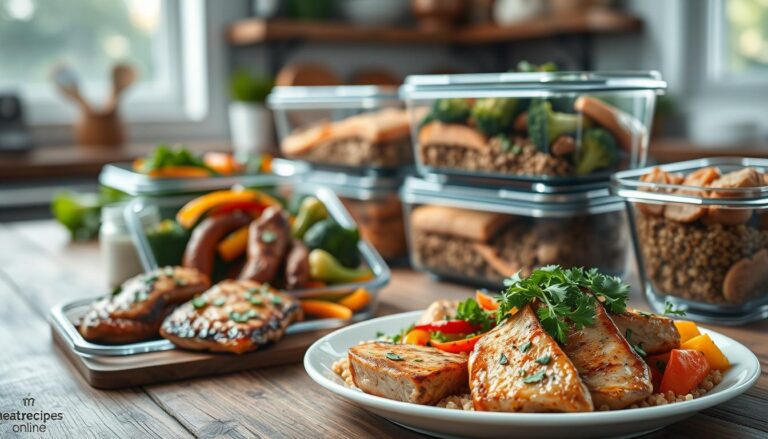
Batch-cooking the beef and rice makes a high protein beef bowl easy to prepare. Store it in clear containers for quick reheating. You can use leftover beef in lettuce wraps, over noodles, or in tacos for a new meal.
Get creative with your korean beef bowl. Try different bases like quinoa or noodles. Use chicken, turkey, or tofu instead of beef. Add kimchi, avocado, pickles, or toasted shallots for extra flavor.
Try putting korean beef in tacos or on loaded fries. This keeps mealtime exciting and fun.
For a final touch, drizzle with sesame oil and sprinkle scallions and sesame seeds. Offer spicy mayo or a soy-sesame drizzle for extra flavor. These details make your korean beef rice bowl unforgettable.
If you enjoy customizable bowl meals, this cottage cheese burger bowl recipe is another high-protein option that’s easy to prepare for lunch or dinner.
FAQ
How can I store leftovers?
Can I freeze the Korean Ground Beef Bowl?
What type of rice goes best with this dish?
Which ground beef should I use for the best results?
Why do I grate an apple and onion in the sauce?
How long does this recipe take to prepare and cook?
Can I make this dish spicy or mild to suit different tastes?
What toppings and sides complement the bowl?
Is this recipe good for meal prep?
How can I keep the beef moist and caramelized?
Can I make vegetarian or vegan versions of this bowl?
How do I adapt the recipe for gluten-free diets?
What is a typical nutrition snapshot per serving?
Can I use other proteins beside beef?
What bases other than rice can I use?
⭐ Love This Recipe? Tell Us What You Think!
There are no reviews yet. Be the first one to write one.