Carnivore Burger Bowl Recipe (High Protein Meal)
Are you ready for a protein-packed meal that’s easy to prepare and full of flavor? This meat lovers bowl is perfect for those following carnivore, ketogenic, or low-carb diets. It’s a quick and satisfying meal for U.S. readers.
This dish is loved for its simple ingredients like quality ground beef, bacon, and aged cheddar. It’s quick to make, thanks to minimal seasoning and straightforward cooking. It’s great for busy weeknights or meal prep.
Try this recipe for a meal that’s filling, has clear nutrition facts, and is easy to make. You’ll find ingredients, cooking steps, serving sizes, and storage tips. Plus, nutrition facts, expert tips, variations, and pairing ideas to enhance your meals.
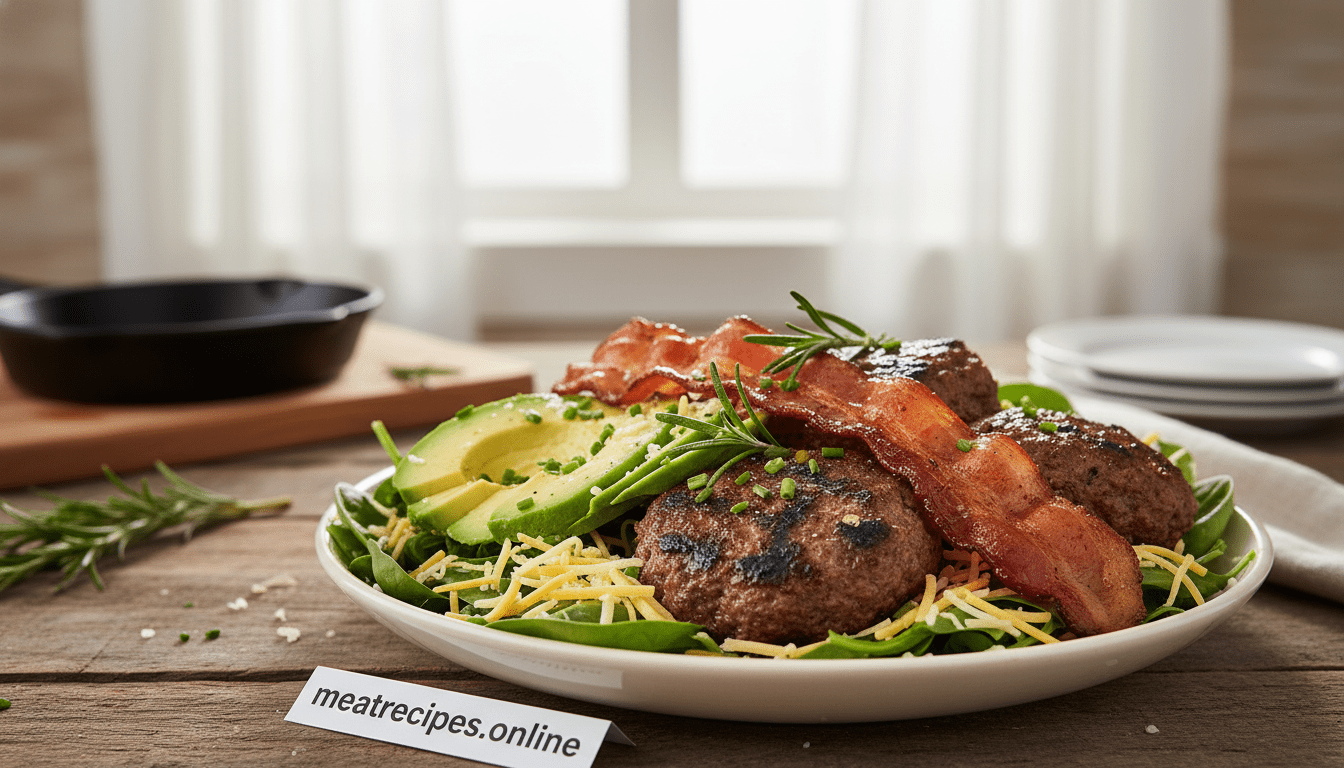
Carnivore Burger Bowl
Ingredients
Method
- In a large skillet over medium heat, cook the bacon until crispy; remove and crumble, reserving the rendered fat in the pan.
- Add the radishes to the bacon fat in the same skillet and cook until tender and lightly browned; remove from the pan. (If skipping bacon, use 1 tbsp olive oil and a pinch of salt instead.)
- In the same skillet, brown the ground beef over medium heat, letting it sear undisturbed for 4-5 minutes before breaking it up. Continue cooking until it reaches an internal temperature of 160°F.
- While the meat cooks, mix the burger sauce: combine the mayonnaise, ketchup, mustard, pickle juice, and Worcestershire sauce to taste.
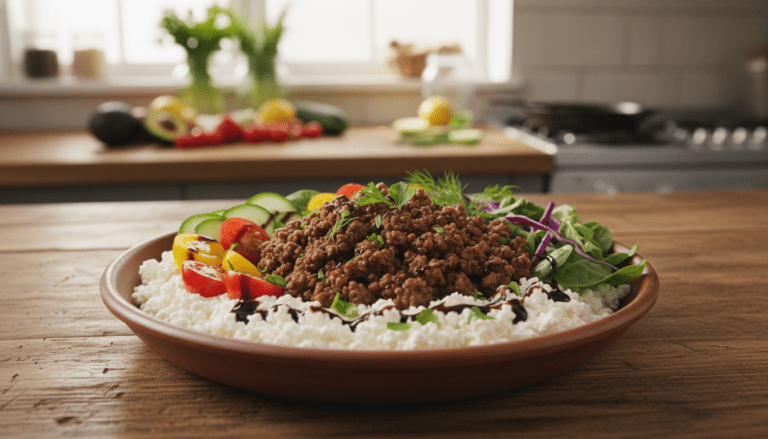
- Assemble the bowls: start with the cooked ground beef as the base, add the cooked radishes, then top with shredded cheese and diced dill pickles.
- Top with the burger sauce, then finish with fresh parsley and grated Parmesan if desired. Optionally, place the bowls in a 400°F oven for 10 minutes to melt the cheese before serving.
Notes
Table of Contents
Key Takeaways
- The carnivore burger bowl is a protein-packed meal perfect for keto and low-carb lifestyles.
- Simple ingredients and short cook times make it ideal for meal prep and busy schedules.
- This meat lovers bowl focuses on quality ground meat, high-fat add-ons, and bold flavor.
- You’ll find practical substitutions and clear cooking temperatures in the full guide.
- The recipe balances convenience, nutrition, and taste for reliable weeknight dinners.
What is a Carnivore Burger Bowl?
This guide explains what a carnivore burger bowl is. It talks about its origins and what it’s made of. It’s perfect for those who love high-protein and low-carb foods.
Definition and Origin
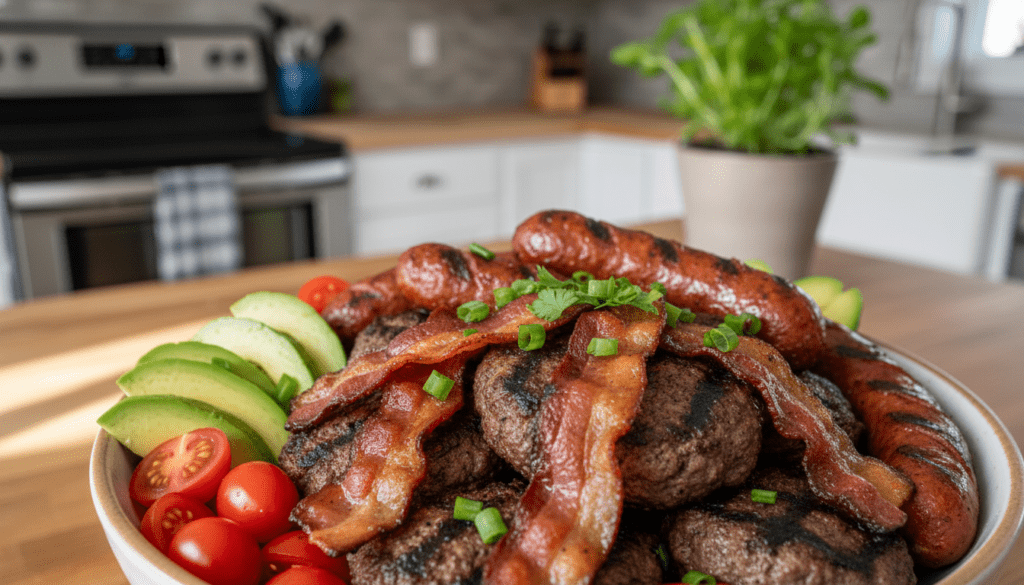
A carnivore burger bowl is a meal without a bun. It’s filled with ground meat, bacon, cheese, eggs, and animal fats. It’s a twist on the classic burger, minus the carbs.
This dish came from low-carb and ketogenic versions of comfort foods. People started making bacon cheeseburger casseroles and skillet recipes. These recipes evolved into the protein-packed bowl we know today.
Key Ingredients
The main ingredients are lean ground beef, bacon, cheese, and eggs. A simple burger sauce made with mayo, ketchup, and spices brings it all together.
You can add low-carb veggies like radishes or turnips. Dill pickle slices, salt, pepper, parsley, or Parmesan cheese are great toppings. This mix creates a hearty, meaty bowl that follows carnivore principles.
Health Benefits
Each bowl is rich in protein. This supports muscle health and keeps you full. The carb count is low, which is good for those on a ketogenic diet.
The bowl focuses on fats and proteins, making it filling and customizable. It’s perfect for batch cooking. You can adjust the size to fit your dietary needs, whether you’re following a strict ketogenic diet or just enjoying a meaty meal.
| Feature | Typical Ingredients | Per-Serving Estimate |
|---|---|---|
| Protein source | Extra-lean ground beef, alternative ground meats, eggs | Varies by ingredients |
| Fats | Bacon, rendered animal fat, cheese, mayo | Variable; adjustable by portion |
| Carbs | Minimal; optional radishes, turnips, pickles | Varies by ingredients |
| Flavor enhancers | Worcestershire, mustard, pickles, salt, pepper, parsley | Low calories; high taste impact |
| Meal style | One-bowl, deconstructed burger, easy meal-prep | Serves 1–4 depending on portions |
Nutritional Benefits of the Carnivore Diet
The carnivore diet focuses on animal foods for dense nutrition with little carbs. It offers a protein-rich meal that aids muscle repair, keeps you full, and boosts calorie burn. Here’s how this diet turns a simple bowl into a powerful daily nutrition choice.
High protein content
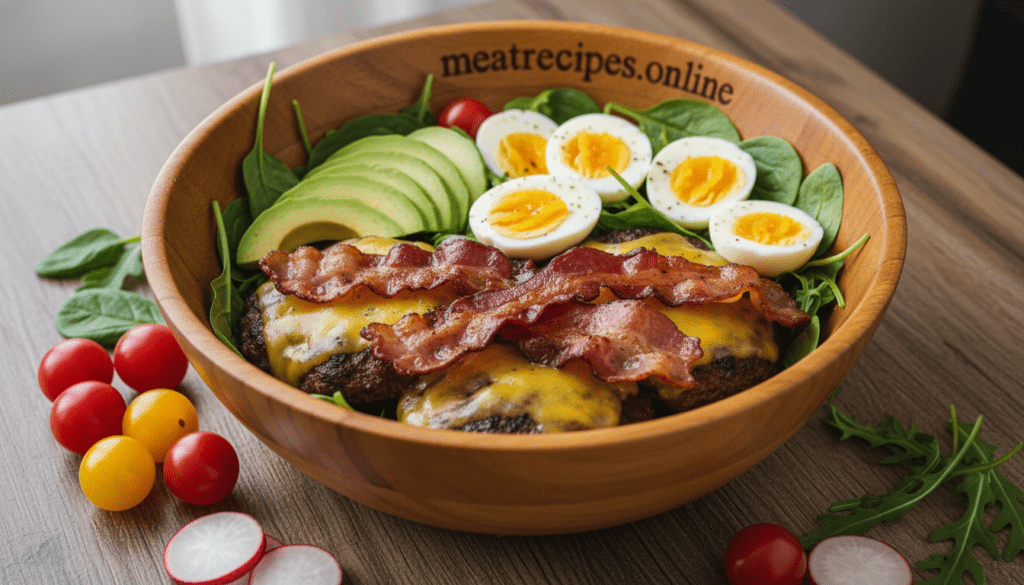
Ingredients like ground beef, bacon, shredded cheddar, and eggs are high in protein. A single skillet bacon cheeseburger recipe has about 325 kcal. This protein helps maintain muscles, reduces hunger, and increases calorie burn during digestion.
Practical examples
Make a high protein bowl with 4 ounces of 80/20 ground beef, one fried egg, and two strips of bacon. This mix is a quick, savory plate that meets protein needs. You can adjust portions based on your activity level or calorie goals.
Low carbohydrate options
To keep carbs low, use trimmed radishes, roasted turnips, or skip veggies. This makes it great for a low carb burger bowl or a keto-friendly dish.
Carb control tips
Use sugar-free or low-carb sauces and skip sweet ketchup. Choose roasted low-carb veggies for color and texture. You can adjust fat levels to change calorie and satiety levels.
Macro flexibility
With simple swaps, you can adjust a carnivore bowl to fit your needs. You can make it higher in fat for a ketogenic diet or leaner for athletic performance. This flexibility keeps the protein-rich base while meeting different goals.
Essential Ingredients for Your Burger Bowl
Before you start, make a shopping list and choose wisely. A great carnivore burger bowl needs good protein first. Then, add items that enhance flavor, texture, and fullness.
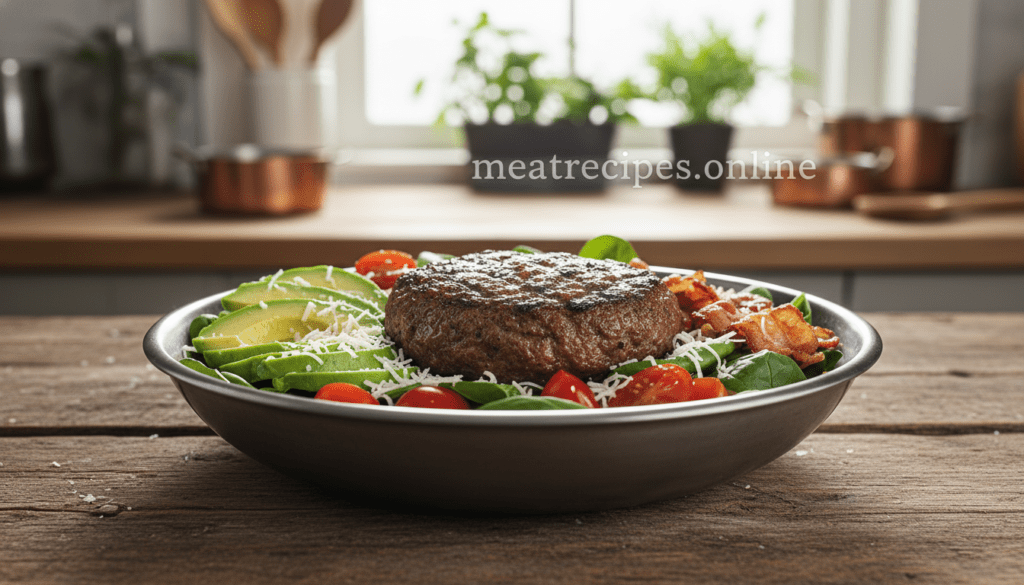
Quality ground meat is key. For juiciness, pick 80/20 ground beef. For leaner options, go for 90/10 or 96/4. The recipe uses 96/4 for less fat.
Ground pork, lamb, chicken, or turkey are good alternatives. But, they cook differently. For a gamey taste, try ground bison. Press the meat gently while cooking to get a nice crust.
Toppings and add-ons make each bowl unique. Start with cooked bacon and cheese like American or cheddar. Add diced pickles for a tangy touch and parmesan for a sharp flavor.
Don’t forget fresh parsley for looks and smell. For low carbs, use radishes, roasted turnips, or sautéed mushrooms.
Plan your servings. The recipe makes 3–4 bowls. Use this ratio for meal prep and busy days.
Sauces and dressings complete the bowl. A simple burger sauce is ketchup, mayo, mustard, pickle juice, and Worcestershire. Adjust the mix to your taste. For keto, use full-fat mayo or sour cream.
With the right meat, toppings, and sauces, you’ll make a filling, protein-rich bowl. It’s customizable to your taste and dietary goals.
How to Prepare the Perfect Burger Bowl
Learning to make a great carnivore burger bowl is easy. Start with fresh ground beef and quality bacon if you like. Use a big skillet to make sure everything fits well. This way, you keep the flavors and textures just right.
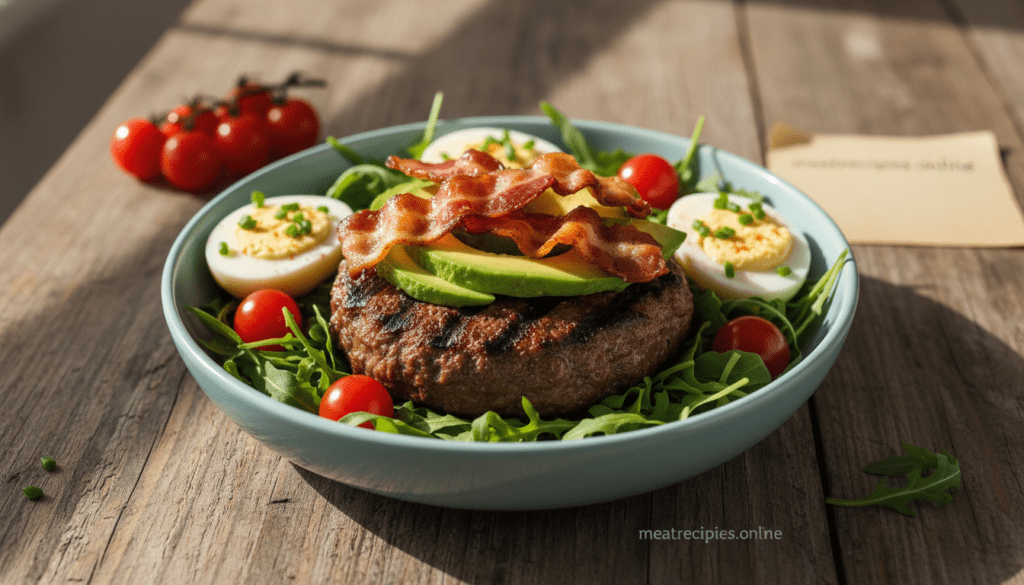
Below, you’ll find simple steps for cooking the meat and assembling the bowl. These tips make it easy to make this protein-packed meal at home.
Cooking the Meat
First, brown the meat in a large skillet over medium heat. For 1 lb ground beef, let one side sear for 4–5 minutes before breaking it up. Keep cooking until it reaches 160°F, as the USDA recommends.
For bacon, cook the center-cut strips until they’re crispy. Save the fat for cooking radishes or to brown the meat for more flavor. Crumble the bacon and use it as a topping for texture.
Assembling the Bowl
Start with the cooked meat as the base. Add cooked radishes or low-carb veggies next, making sure they’re evenly spread. Then, top with shredded cheese and diced pickles for a nice contrast.
Finish with crumbled bacon, burger sauce, and an herb like parsley or grated Parmesan. For a casserole-style finish, bake at 400°F for 10 minutes after adding cheese. This way, the cheese melts and all the flavors come together. You’ll get 3–4 servings, each with about 325 kcal.
Recommended Cooking Techniques
Use a large skillet to avoid overcrowding and steaming the meat. If your pan is small, remove radishes while browning the meat and add them back later. Cut radishes into quarters or eighths for even cooking.
According to the USDA, beef is an excellent source of high-quality protein and essential nutrients that support muscle maintenance and overall health.
To get a crispy texture, render bacon first and cook radishes in that fat. If you skip bacon, use 1 tbsp olive oil and a pinch of salt to enhance flavor. These techniques help keep the bowl satisfying and the textures clean.
Customizing Your Carnivore Burger Bowl
You can make this ketogenic burger bowl your own. Small changes can alter taste, texture, and macros. Here are some tips for proteins, veggies, and flavor boosts to fit your diet.
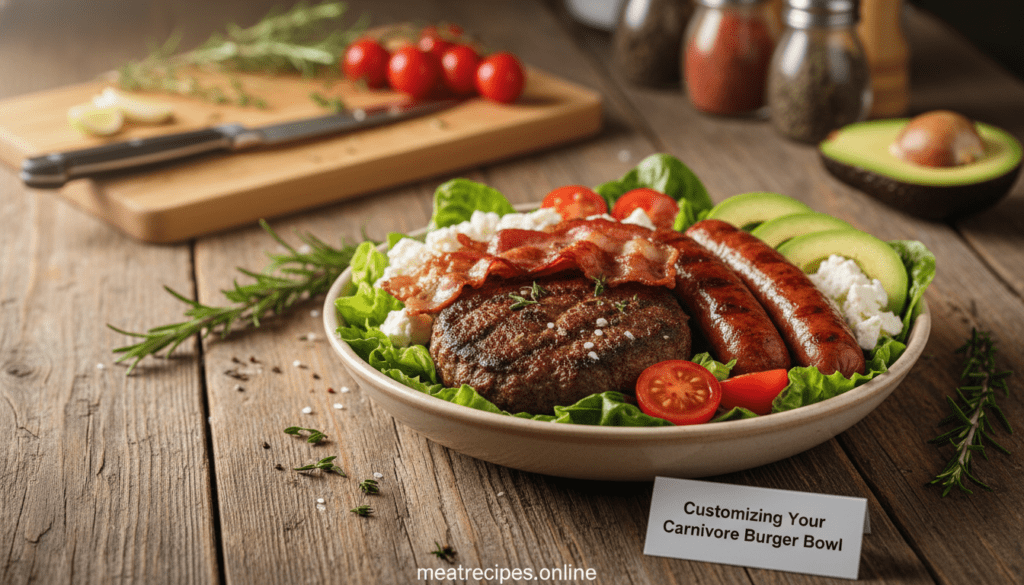
Choosing the right protein is key. Ground beef offers a classic taste and lots of fat. Ground pork and lamb are fattier and more savory. Ground bison is leaner but tastes like beef.
Ground turkey or chicken are lighter options. But, cook them carefully to avoid dryness. Shredded rotisserie chicken adds convenience and a unique texture. Add hard-cooked or fried eggs for extra protein and fats.
Try ground chicken with a tangy sauce for a twist on the classic bowl.
Low-Carb Vegetables
Radishes can replace potatoes when quartered and roasted. They get crispy and taste like roast. Cauliflower works as rice or roasted florets, great with cheese.
Mushrooms and Brussels sprouts add depth and umami. Turnips roast well for a firmer bite. For a bit more carbs, try diced potatoes or butternut squash. But, stick to low-carb veggies for strict diets.
Flavor Enhancements
Small tweaks can make a big difference. Mix pickles and parsley into cheese for tangy pockets. Or, add cold pickles for crunch.
Adjust your burger sauce to taste. More ketchup for sweetness, more Worcestershire for umami, more mustard for tang. Try different cheeses for unique flavors. These tweaks keep your bowl exciting while staying true to your diet.
Tips for Meal Prepping Your Burger Bowl
Meal prepping a carnivore burger bowl makes eating on weekdays easy and tasty. Here are steps for storing ingredients, cooking in batches, and reheating tips. These keep your high protein bowl fresh and delicious.
Storing Ingredients
Keep cooked ground beef, radishes, and bacon in separate containers in the fridge. This keeps flavors and textures good for 3–4 days.
Store sauces in small jars to prevent sogginess. Burger sauce stays fresh for 5–7 days if made with fresh ingredients.
Freeze cooked meat in portioned bags or vacuum-sealed packs for up to three months. Thaw overnight in the fridge before reheating for the best taste.
Cooking in Batches
Scale the recipe to fit your meal needs. For example, 1 lb ground beef, 12 oz radishes, and 4 oz cheese make 3–4 servings. Just multiply the ingredients for more batches.
Cook large amounts of meat and radishes in a skillet or sheet pan. Then, portion into containers and keep toppings and sauces separate.
Add cheese later and broil or microwave briefly to melt. This keeps the cheese hot and fresh.
Reheating Tips
Reheat on the stovetop over medium heat for the best texture. Add a splash of water or broth if it’s dry. This method keeps the meat moist without overcooking.
To melt cheese, bake in an oven-safe dish at 400°F for 6–8 minutes or broil briefly. This gives a bubbly cheese finish.
When microwaving, use medium power and heat in short intervals. Reheat sauces separately and add fresh pickles or garnishes after reheating to keep them crunchy.
| Task | Method | Storage Time | Best Use |
|---|---|---|---|
| Cooked ground meat | Airtight container in fridge or vacuum-seal for freezer | 3–4 days fridge, 3 months freezer | Base for your high protein bowl |
| Cooked radishes / veg | Separate airtight container, cool before sealing | 3–4 days fridge | Maintain texture when assembled |
| Bacon and crispy toppings | Paper towel-lined container to absorb grease | 3–4 days fridge | Preserves crispness for toppings |
| Sauces and dressings | Small jars or containers, refrigerated | 5–7 days | Keeps components from getting soggy |
| Portioning for meals | Meal-prep containers with toppings on the side | N/A | Easy grab-and-go high protein bowl servings |
| Reheat method | Skillet, oven broil, or microwave (medium power) | N/A | Use stovetop for best texture; oven to melt cheese |
Popular Variations of the Carnivore Burger Bowl
You can make your low carb burger bowl more exciting with a few simple changes. Here are two tasty versions that add flavor and texture. They’re great for meal prep or a quick dinner.
Try the bacon and cheese twist for a rich, indulgent meal. Cook center-cut bacon until it’s crispy. Save the fat to cook the ground beef for more flavor. Mix in a burger sauce with Dijon and pickle brine.
Top the meat with a blend of three cheeses or extra shredded cheese. Bake at 400°F for 10 minutes to melt the cheese. Add crumbled bacon and parsley for a pop of color. This version is a meat lover’s dream that’s also low in carbs.
The spicy sriracha version adds a bold kick without adding carbs. Mix sriracha into your burger sauce or drizzle sriracha mayo on top. Add diced jalapeños or hot pepper flakes for more heat. Use sugar-free sriracha for a keto-friendly option.
Below is a compact comparison to help you pick a route based on flavor, prep, and carb control.
| Variation | Key Steps | Flavor Profile | Approx. Nutrition per Serving |
|---|---|---|---|
| bacon and cheese twist | Render bacon fat, brown beef in fat, combine with burger sauce, top with three-cheese blend, bake, finish with crumbled bacon | Rich, savory, smoky | ~325 kcal |
| spicy sriracha version | Stir sriracha into sauce or make sriracha mayo, add jalapeños or spicy cheddar, control sugar for keto | Spicy, tangy, bright | Variable; low carb when sugar-free sriracha used |
| meat lovers bowl | Combine multiple proteins: ground beef, bacon, sausage or steak tips; finish with cheese | Hearty, layered meat flavors | High protein, moderate to high fat, low carbs |
| low carb burger bowl (base) | Quality ground meat, simple sauce, pickles or low-carb veg, olive or bacon fat for cooking | Clean, umami-forward | Low carbs, high protein |
Pairing Suggestions for Your Burger Bowl
Find pairings that boost flavor without hiding the taste of your meat lovers bowl. Here are some side and drink ideas that are keto-friendly. Choose what you like and fits your diet.
Side Dishes
Choose sides that are hearty and simple. Roasted Brussels sprouts or sautéed mushrooms add a rich taste. They also fit well with a keto diet.
Try roasted radishes or turnip “fries” for a low-carb snack. A small amount of cauliflower mash adds creaminess without too many carbs.
A tangy pickle plate or a small sugar-free coleslaw can add a nice contrast. For a bit of freshness, a light salad with olive oil is a good choice.
Beverage Options
Drink beverages that match the boldness of your meat lovers bowl. Opt for water, sparkling water, or unsweetened iced tea. They keep you hydrated without breaking ketosis.
Black coffee is a great match for strong flavors. For alcohol, pick dry red wine or clear spirits like vodka, tequila, or whiskey. Use zero-carb mixers and drink in moderation.
If you’re on a strict carnivore or keto diet, consider drinks with electrolytes. Salted water or mineral water can help keep your body balanced during meals.
Troubleshooting Common Issues
Having trouble with your low carb burger bowl? A few quick fixes can help. Follow these steps to fix common texture and taste problems. This way, your meal will stay delicious and true to the carnivore diet.
Meat Overcooking
Dry, tough meat often comes from overcooking or using too lean a grind. Choose an 80/20 blend for juicier meat. If you prefer 96/4, add olive oil or bacon fat while cooking.
Don’t break the patty too soon. Let it brown for 4–5 minutes on the first side. Then, remove it from heat when it’s no longer pink. For ground beef, aim for an internal temperature of 160°F.
At the table, add butter, extra sauce, or olive oil to moisten the meat. These small touches can fix the texture without adding carbs.
Flavor Imbalance
Sauces and toppings can make flavors too sweet, salty, or tangy. Taste your burger sauce before adding it. If it’s too sweet, use less ketchup. For depth, add Worcestershire or mustard.
If it’s too salty, squeeze lemon juice. This helps. Reduce salt in future batches to avoid the same problem.
Flat flavor means the meat didn’t brown well. Brown meat properly to add savory notes. Add Worcestershire or smoked paprika to enhance flavor without carbs.
| Problem | Likely Cause | Quick Fix |
|---|---|---|
| Dry, tough meat | Overcooking or too-lean grind | Use 80/20 or add cooking fat; brown 4–5 minutes before breaking; remove at 160°F |
| Meat lacks juiciness | Insufficient fat or moisture | Finish with butter, sauce, or olive oil drizzle |
| Too sweet or too tangy sauce | Imbalanced sauce ratios | Taste and tweak: more ketchup = sweeter, more mustard = tang, more Worcestershire = umami |
| Overly salty | Excess added salt or salty condiments | Reduce salt next time; add a squeeze of lemon if acceptable |
| Flat flavor | Poor browning or lack of depth | Ensure proper browning; add Worcestershire or smoked paprika |
Frequently Asked Questions (FAQs)
You might wonder if the carnivore burger bowl is right for you. It’s packed with protein and can fit into various diets. Here are answers to help you decide and make it your own.
Is it suitable for everyone?
The bowl is great for those on a carnivore, ketogenic, or low-carb diet. It’s a top choice for a high-protein, low-carb meal.
But, it’s not for everyone. It’s not good for people with advanced kidney disease or those advised to limit saturated fat. Always check with your doctor before adding it to your diet.
Vegetarians can add low-carb veggies like spinach or radishes. Those following a strict carnivore diet stick to meat, fats, and cheese only.
Can I modify the recipe for different diets?
Yes, you can. For less fat and more protein, use lean ground beef and less cheese. For more fat, choose fattier meat and add bacon or extra cheese.
For a paleo version, skip the dairy and use egg yolks or compliant sauces. Whole30 followers should avoid cheese and sugar in condiments, opting for compliant mayo and mustard instead.
To add carbs, try potatoes or a bread roll. These changes let you tailor the recipe to fit your diet while keeping it protein-rich.
Closing Thoughts on the Carnivore Burger Bowl
You now have a solid base for a meat lovers bowl. It’s great for keto diets and everyday meals. Feel free to adjust the recipe for your taste. Swap ground beef for chicken, try different cheeses, or add bacon and pickled radishes.
Encouragement for Exploration
Try new proteins, cheeses, and sauces to make it your own. You could add bacon and cheese, or go for a spicy sriracha version. Always track the fat and protein to stay on track.
Final Recipe Tips
Here’s a quick guide: choose the right ground meat ratio, brown it well, and cook radishes evenly. Brown the ground beef for 4–5 minutes on each side. Then, break it apart.
For an oven melt, bake at 400°F for about 10 minutes. Make sure the ground beef is at least 160°F. The recipe makes 3–4 servings.
Store the parts separately: in the fridge for 3–4 days, or freeze the meat for up to 3 months. You can also try other dishes like bacon cheeseburger casserole or a one-pan cheeseburger skillet. Low-carb cheeseburger pasta and garlic-parmesan air-fryer radishes are great sides. These tips will help you perfect the carnivore burger bowl and keep meal planning easy.
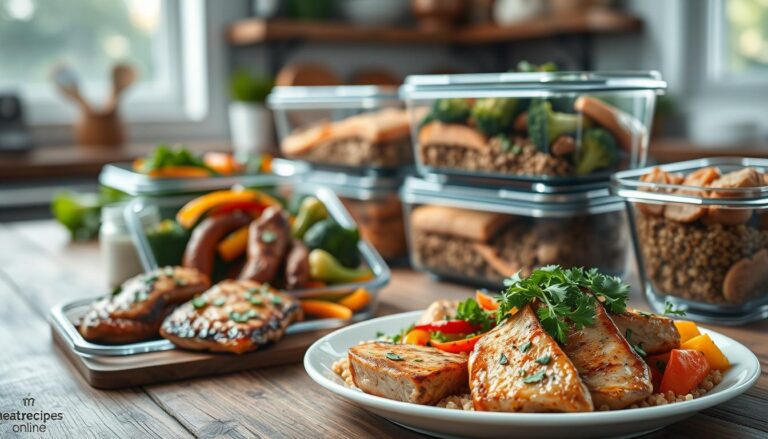
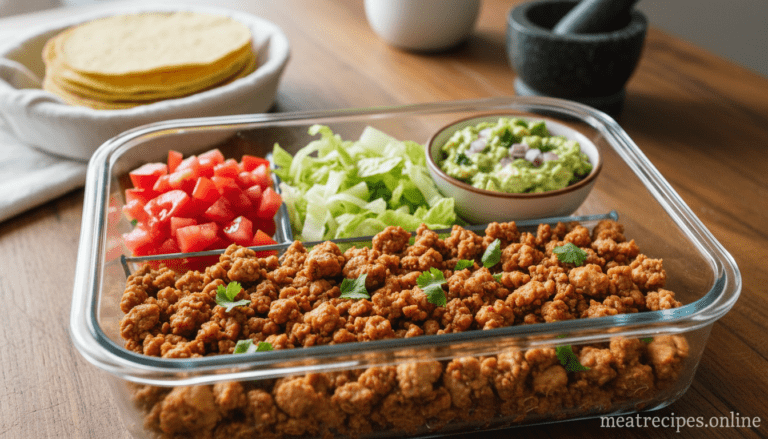
For busy weekdays, many people also prepare high protein taco meat meal prep to save time while increasing their daily protein intake. Both recipes are simple, satisfying, and perfect for meal planning.
FAQ
What is a carnivore burger bowl?
Who is the target audience for this recipe?
What are the core ingredients I need?
How much protein and carbs can I expect per serving?
Which ground beef ratio should I use?
Can I substitute other proteins?
How do I keep the dish low in carbs?
What’s the best way to brown the meat for maximum flavor?
How do I use bacon and its fat in the recipe?
Should I bake the bowl after assembling?
How should I portion the recipe for meal prep?
How long will leftovers keep in the fridge or freezer?
What are the best reheating methods?
Can I make this bowl spicier or change the sauce?
What low-carb sides and beverages pair well?
What common problems should I watch for and how do I fix them?
Is the carnivore burger bowl suitable for everyone?
Can I modify the recipe for different dietary needs?
What final tips should I follow for consistent results?
⭐ Love This Recipe? Tell Us What You Think!
There are no reviews yet. Be the first one to write one.